


Talk to us
08071791510
Talk to us
08071791510
In commercial food production, industrial catering, and large-scale flatbread manufacturing (such as chapatis, rotis, parottas, puris, and tortillas), dough preparation is the single most critical step governing final product quality. Commonly referred to in South Asian food processing as an Atta Kneader, an Industrial Dough Mixer, or a Spiral/Z-Blade Kneader, this machinery is engineered to transform raw flour and water into a perfectly cohesive, highly viscoelastic dough matrix.
Manually kneading large volumes of wheat flour is not only physically grueling and highly inefficient, but it also introduces significant product consistency variables. Wheat flour contains specialized storage proteinsspecifically gliadin and glutenin. When hydrated and subjected to mechanical shearing and stretching, these proteins cross-link to form a complex, elastic network called gluten.
An industrial atta kneader uses advanced mechanical blades, optimized torque profiles, fluid dosing systems, and robust structural engineering to manage this biochemical gluten development while keeping dough temperatures cool and output quality uniform. This technical manual breaks down the design, operation, physics, and maintenance of industrial atta kneading machines across seven core pillars.
Industrial dough processing environments involve continuous exposure to moisture, fine flour dust, abrasive starches, and high mechanical forces. The structural architecture of an atta kneader must be exceptionally rigid to support high-torque mixing cycles without suffering structural fatigue.
Because kneading a dense, high-hydration flour mass generates massive resistance forces, the machine's base frame serves as its anchor. The chassis is fabricated using heavy-duty, hot-rolled structural carbon steel channels or thick-walled SUS304 stainless steel profiles.To ensure food safety compliance, the entire base structure is completely enclosed in stainless steel cladding panels. This prevents fine flour dust from settling into the internal drive components, making it easier to wash down the equipment after a shift.
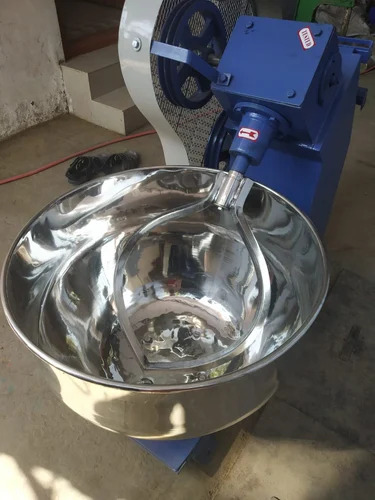
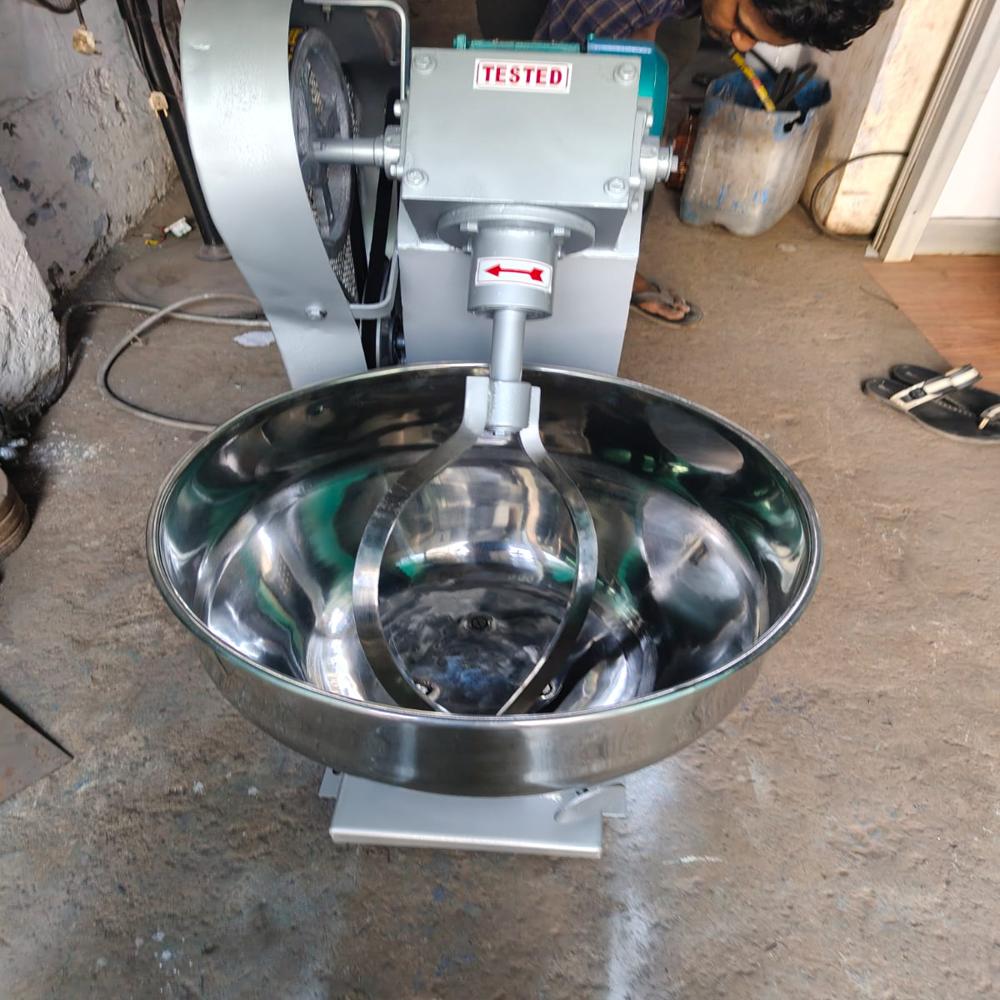
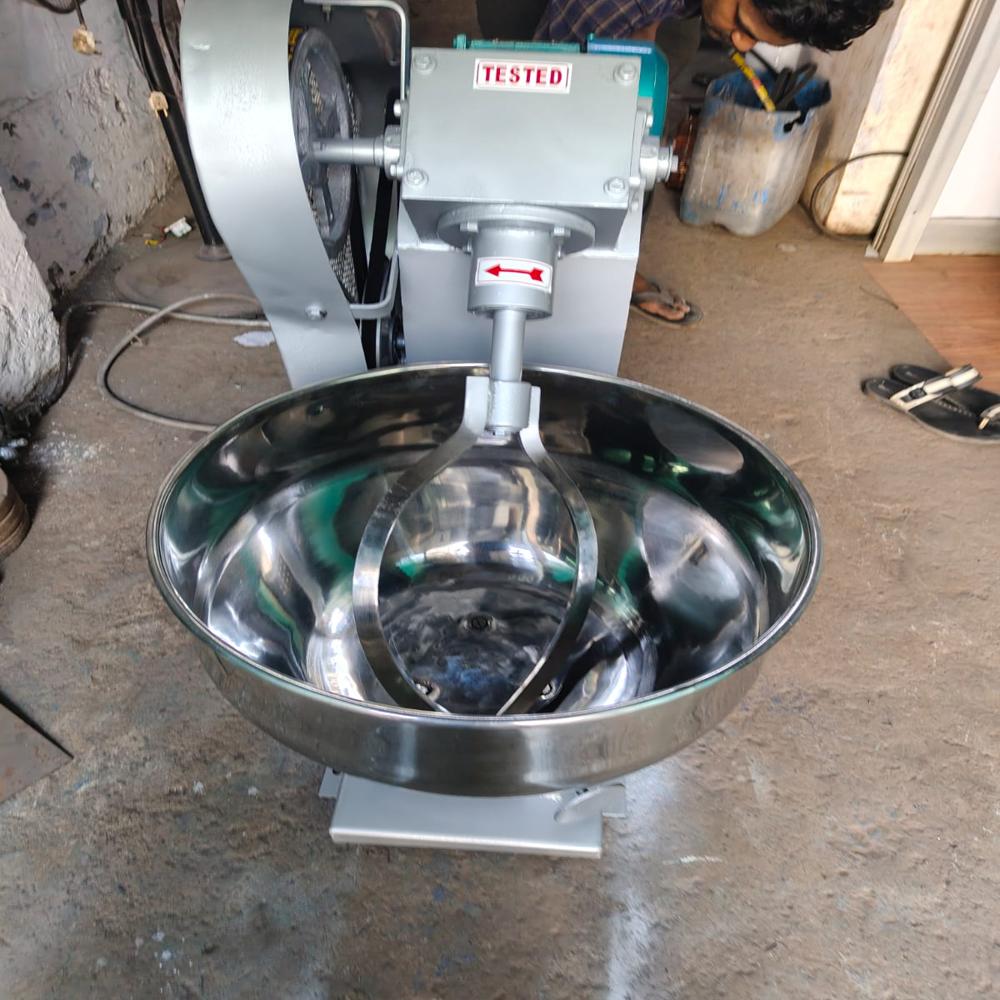
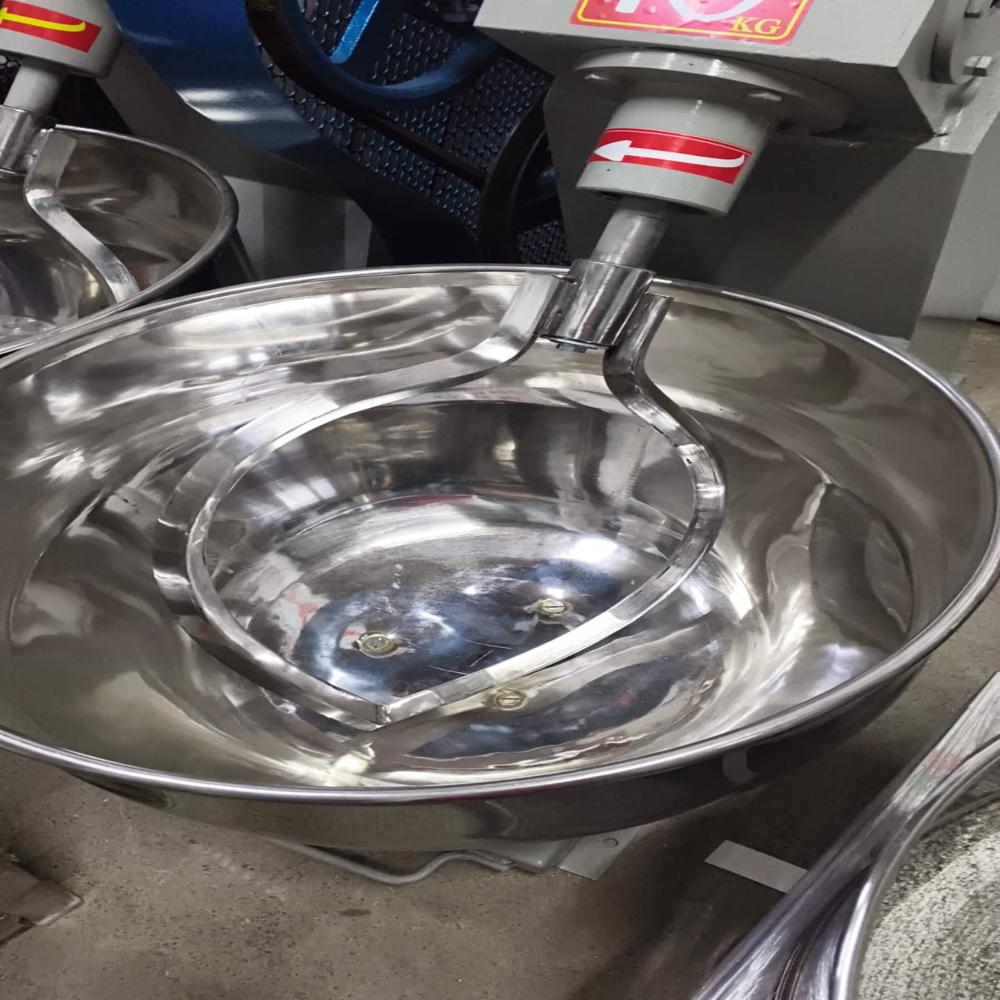
The bowl that holds the flour during the kneading cycle must withstand intense continuous pressure. It is pressed or deep-drawn from a single sheet of heavy-gauge stainless steel, ensuring there are no internal welds or sharp corners where dry flour could hide.
The bottom of the bowl features a specialized hemispherical or torispherical profile. This shape coordinates with the trajectory of the mixing tool, eliminating "dead zones" where unmixed flour could accumulate. Depending on the machine design, the bowl can either be stationary, rotate mechanically on a central axis, or tilt hydraulically for automatic dough unloading.
The kneading tool is the primary component that applies physical energy to the flour mass. It is forged from solid, high-tensile stainless steel bars to prevent bending or cracking under peak torque loads.
The shape of the agitator arm varies by application:
Spiral Hooks: Feature a coiled, helical geometry that mimics human hand-kneading by pressing the dough downward, outward, and against the bowl wall.
Z-Blade / Sigma Arms: Dual-tangential blades that provide an intense shearing and stretching action, ideal for dense, low-hydration parotta doughs.
Transferring mechanical energy from a high-speed electric motor to a slow, high-torque kneading arm requires a robust transmission system. The power source is typically a heavy-duty, multi-phase AC induction motor.
Power is stepped down through two primary methods:
Planetary Gear Reduction Units: Deliver smooth torque distribution and high mechanical efficiency, allowing the mixing arm to maintain a constant speed even when processing dense dough masses.
Dual-Stage Heavy-Duty Chain Drives: Use hardened steel sprockets running in enclosed oil baths. This layout provides exceptional shock absorption, protecting the motor from sudden resistance spikes when raw flour absorbs water and forms a solid mass.
Not all flatbread doughs share the same physical properties. A soft chapati dough requires a high-hydration, gentle folding action, whereas a layered parotta dough demands intense mechanical shearing. Different industrial kneader variations are engineered to meet these unique processing requirements.
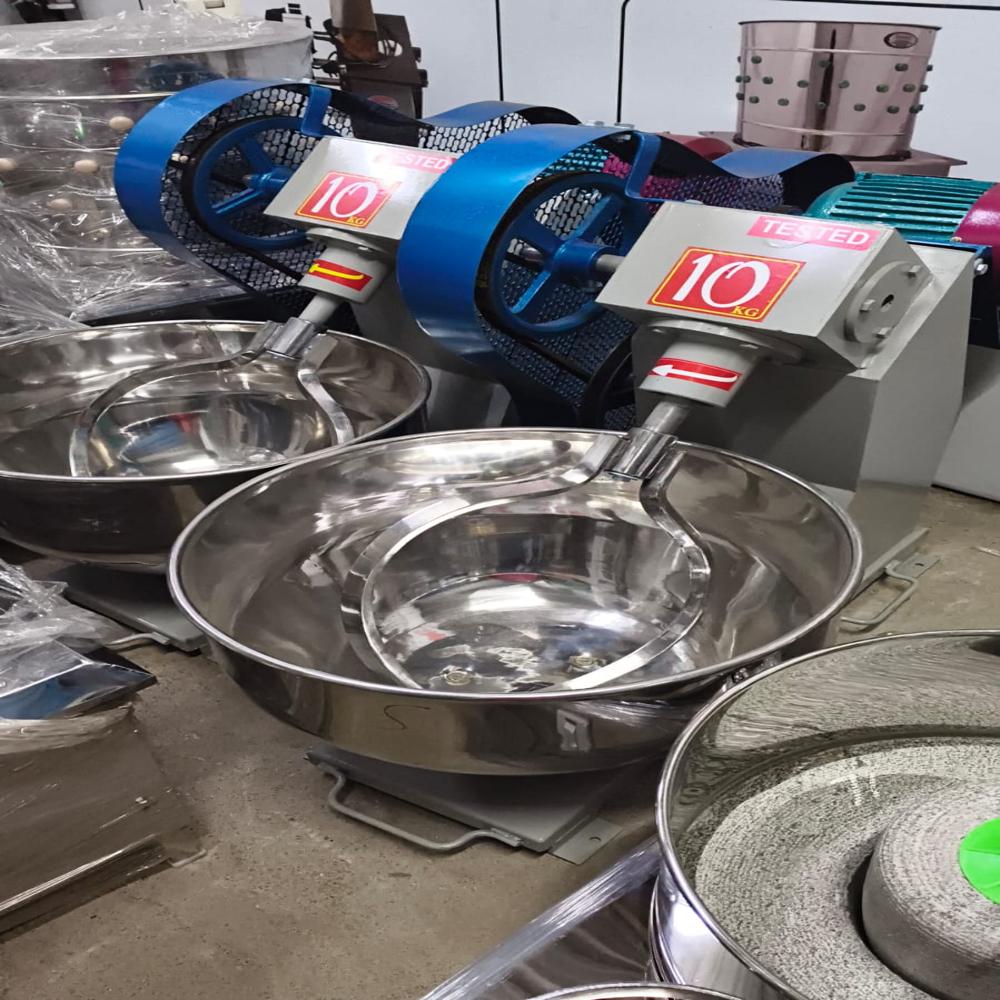
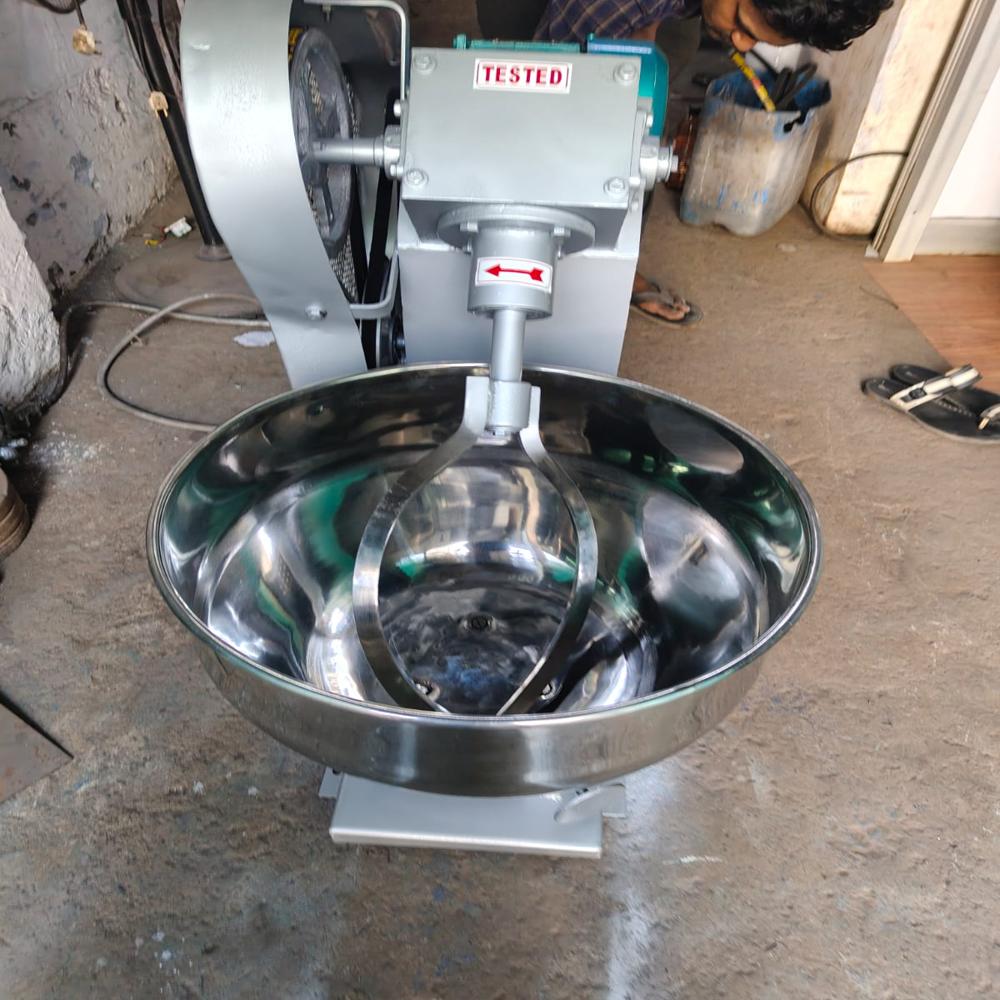
Spiral mixers are the most popular choice for commercial chapati and roti production. The machine incorporates two separate rotational actions: the spiral hook spins at high speeds around a vertical axis, while the stainless steel bowl rotates slowly on its own driven base.
This dual-rotation design ensures that the spiral hook processes only a small segment of the total dough mass at any given micro-second. This localized action prevents the dough from riding up the shaft, lowers power consumption, and minimizes mechanical friction, which keeps dough temperatures stable.
For heavy industrial operations where the dough features low water hydration and high fat content (such as commercial parotta lines), horizontal Z-blade mixers are used. The machine features a horizontal double-u trough containing two parallel, horizontal mixing shafts equipped with heavy Z-shaped blades.
These blades rotate toward each other at different speeds . As the blades pass, they shear, squeeze, and stretch the flour mass between them and against the trough walls. This intense action ensures that fats and oils are distributed uniformly throughout the starch matrix, producing a highly elastic dough that can be stretched into thin layers.
Twin-arm machines reproduce the exact push-and-pull rhythm of manual hand kneading. One arm features a fork shape that pulls and lifts the dough mass upward, while the second arm features a spade profile that stretches and presses the dough back down into the bowl.
This lifting action maximizes oxygen absorption into the dough matrix, which helps activate natural enzymes and produces an exceptionally soft flatbread texture. However, because of their complex mechanical link networks, twin-arm machines feature lower throughput speeds and higher maintenance requirements than spiral configurations.
Kneading is not just a simple mechanical mixing task; it is a precise biochemical transformation process. To produce high-quality dough, an industrial machine must carefully manage mechanical forces, moisture absorption, and thermal energy.
Raw wheat flour contains two primary proteins: gliadin, which provides extensibility (allowing the dough to stretch without breaking), and glutenin, which provides elasticity (giving the dough strength to snap back into shape). In dry flour, these proteins are folded tightly and distributed randomly.
When water is introduced, it hydrates these proteins, causing them to uncoil. As the mixer arm shears and folds this wet mass, it physically aligns the uncoiled protein molecules in parallel tracks.
This alignment allows the proteins to form strong covalent bonds called disulfide cross-links. This network creates a continuous, viscoelastic sheet that can stretch thin without tearing, trapping water vapor and air during cooking to ensure flatbreads puff up properly on the griddle.
As gluten cross-linking develops, the dough's viscosity increases, turning it into a dense, sticky mass that resists mechanical movement. This resistance shifts the machine's operational torque requirements.
During the first 2 minutes of mixing (the hydration phase), the torque requirement is low. However, between minutes 4 and 8 (the gluten development phase), the torque requirement spikes as the dough forms a single cohesive ball.
To maintain a steady speed under this heavy resistance, the drive motor must deliver high torque at low rotational speeds without overheating.
A major challenge in automated kneading is managing friction heat. As the stainless steel hook shears through the dense dough, mechanical energy is converted into thermal energy, raising the dough's temperature.
The gluten network begins to weaken and break down, producing a sticky, slack dough that is difficult to handle in automated divider-rounders.
Natural wild yeasts activate too early, creating gas pockets that alter the flatbread's texture.
To combat friction heat, professional mixers incorporate three primary design features:
The Center Breaker Bar: A stationary vertical post positioned in the center of a spiral mixer bowl. It intercepts the rotating dough ball, forcing it to split and roll around the hook rather than spinning as a solid mass against the shaft, reducing internal friction.
Water-Jacketed Cooling Bowls: Double-walled mixing bowls that circulate chilled glycol or iced water through an internal jacket, absorbing friction heat directly through the stainless steel wall.
Precise Speed Calibration: Keeping mixing speeds within optimized limitsbalances rapid gluten development against excessive heat generation.
Operating heavy-duty industrial machinery safely and consistently requires a sophisticated electrical architecture. Control systems handle the automated addition of water, step-up speed changes, and monitor motor safety parameters.
Modern industrial atta kneaders use a Variable Frequency Drive (VFD) to control the mixing motor. The VFD changes the electrical frequency (Hz) delivered to the motor, allowing the machine to shift smoothly between distinct mixing speeds without stopping or using complex manual gearboxes.
The PLC manages this via a standard two-stage automated cycle:
Low-Speed Hydration : The mixing tool turns slowly . This phase gently blends the raw flour, water, and oils into a uniform wet paste without throwing dry dust into the air.
High-Speed Development : The VFD accelerates the motor to turn the mixing arm , applying the mechanical shear needed to stretch and develop the gluten network.
To eliminate variations caused by workers measuring water manually with buckets, advanced atta kneaders feature integrated water dosing networks. The machine connects directly to an external chilled-water line via a fast-acting solenoid valve and an inline digital flowmeter.
When the operator enters a recipe on the HMI touchscreen , the PLC calculates the exact requirement. Once the start button is pressed, the PLC opens the solenoid valve, tracks the flowmeter pulses, and cuts off the water stream automatically when the precise volume is reached, ensuring a consistent dough consistency across every batch.
To prevent batches from overheating due to environmental temperature shifts, a non-contact Infrared (IR) Temperature Sensor is mounted on the upper frame hood, facing down into the center of the moving dough mass.
The sensor continuously streams real-time dough temperature data to the PLC. If the dough temperature crosses a pre-set limit , the PLC alerts the operator via a visual warning on the HMI panel or pauses the cycle to allow the jacketed cooling system to bring the temperature down.
To maximize the service life of an industrial kneader and maintain high food quality standards, production crews must follow disciplined batching and unloading procedures.
For a commercial tilting-bowl spiral mixer, the standard operational sequence follows a strict workflow.
Dough hydration is quantified as a percentage relative to the total dry flour weight, commonly referred to in industrial baking as the Baker's Percentage.
Standard commercial atta formulations typically require a hydration level . If hydration drops , the dough becomes too stiff, overloading the motor and producing hard flatbreads that dry out quickly. If hydration exceeds, the dough becomes excessively sticky, backing up automated sheeting rollers and divider-rounder machinery down the production line.
Manually lifting a sticky dough ball out of a deep mixing bowl can cause severe back strain and injuries for kitchen staff. To eliminate this hazard, commercial setups use one of two ergonomic discharge designs:
Hydraulic Self-Tilting Units: Built-in hydraulic rams lift the entire mixing head and bowl assembly, inverting it completely so the dough slides automatically into a waiting mobile collection hopper.
Bottom-Drop Discharge Outlets: Industrial horizontal mixers feature a sliding gate on the floor of the mixing trough. When the cycle ends, a pneumatic cylinder opens the gate, and the rotating blades push the dough downward onto an intake belt conveyor below.
Because industrial mixers generate high torque forces through heavy, exposed spinning arms, they present serious physical safety hazards if not properly protected. Modern machines incorporate multiple redundant safety features to comply with international manufacturing standards such as CE, NSF, and OSHA regulations.
The mixing bowl is enclosed beneath a heavy-gauge stainless steel wire grid or a transparent plexiglass dome shield. This shield prevents operators from reaching into the bowl while the mixing tool is moving.
A coded magnetic safety interlock switch is integrated directly into the rear hinge of the grid. If an operator raises the guard grid by even a few millimeters during a mixing cycle:
The safety relay immediately breaks the control circuit power.
An active dynamic DC brake inside the motor drive stops the heavy kneading arm in , protecting the operator from injury.
A large, red, mushroom-head Emergency Stop (E-stop) button is positioned prominently on the front of the control box housing. This button is wired directly into a dedicated safety relay, bypassing the PLC software entirely. Pressing the E-stop cuts power to the main motor contactor instantly, and it requires a manual twist-to-release action to reset, preventing accidental machine restarts.
No-Volt Release (NVR) Safety Circuits: If the production facility experiences a sudden power outage during operation, the NVR circuit ensures that when power returns, the machine remains off. The operator must physically press the start button again to resume operations.
Waterproof Electrical Ingress Protection : Because dough mixers require regular wet washing, the electrical control enclosure is built to IP65 or IP66 standards. It features silicone door gaskets and waterproof boot covers over all buttons, preventing moisture from entering the internal wiring and causing short circuits.
Wheat dough leaves behind starchy, high-protein films that dry into hard, stone-like crusts. If these residues are not cleaned daily, they can harbor dangerous foodborne bacteria (such as E. coli or Salmonella), contaminate subsequent batches, and wear down watertight shaft seals.
At the end of every shift, production crews must clean the machine thoroughly using a multi-step sanitation process:
Isolate Power (Lockout/Tagout): Turn off the main wall-mounted circuit breaker and apply a safety lockout tag to prevent anyone from accidentally turning the machine on during cleaning.
Dry Scraping: Use food-safe plastic scrapers to remove large, loose dough remnants from the hook, breaker bar, and bowl walls. Never use metal scrapers or wire brushes, as they scratch the polished stainless steel, creating micro-grooves where bacteria can hide.
Soak Phase: Fill the bowl with warm water and let it sit to soften dried, baked-on starch crusts.
Detergent Scrubbing: Wash all internal food-contact surfaces using a mild, alkaline food-grade detergent and a soft nylon brush to break down oil and protein films.
Potable Water Rinse: Rinse the bowl and hook thoroughly with clean, fresh water until all soap residues are completely washed out through the drain valve.
Sanitization: Spray all surfaces with an approved sanitizing solution (such as diluted peracetic acid or a quaternary ammonium compound). Allow the bowl to air dry completely with the safety grid left open.
To prevent unexpected breakdowns during peak production runs, maintenance technicians should check key systems at regular intervals:
Daily: Check that the safety grid interlock cuts power to the motor instantly when raised. Verify that the bowl drain plug seals tightly without leaking water.
Weekly: Inspect the tension of the main drive belts or chains. Loose transmission lines cause slippage and extend kneading times, while over-tightened lines put excessive loads on the motor bearings, leading to premature failure.
Monthly: Lubricate the main mixing spindle bearings using a grease gun through external zerk fittings. Always use premium, food-grade H1-certified high-temperature grease. Check for any play or movement in the mixing head assembly.
Bi-Annually: Drain and replace the gear oil inside the planetary gearbox reduction unit using high-performance food-safe gear oils. Inspect the main drive shaft rubber oil seals for signs of wear or leakage.

Price:
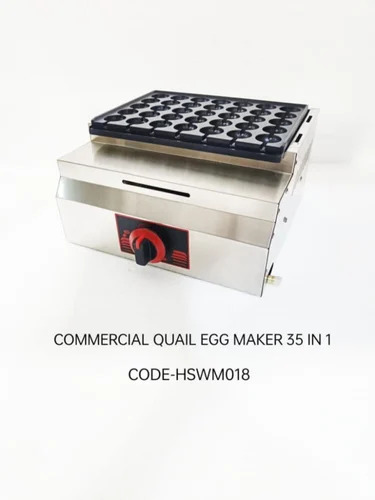
Price 6500 INR / Piece
Minimum Order Quantity : 1 Piece
Application : Commercial Kitchen, Restaurant, Hotel, Snack Bar
Power Source : Electric
Capacity : 35 eggs per batch
Material : Stainless Steel
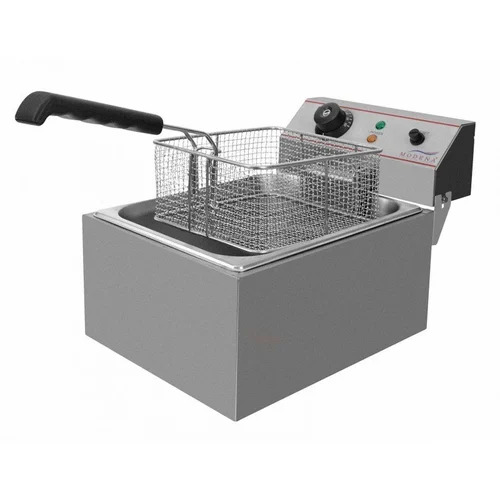
Price 3800 INR / Piece
Minimum Order Quantity : 1 Piece
Application : Hotel, Restaurant, Commercial Kitchen
Power Source : Electric
Capacity : 5 Litres
Material : Stainless Steel
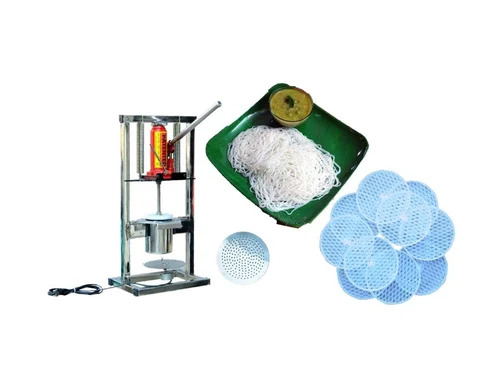
Price 8500 INR / Piece
Minimum Order Quantity : 1 Piece
Application : Idiyappam/Noolputtu making
Power Source : Manual
Capacity : 1kg
Material : Stainless Steel
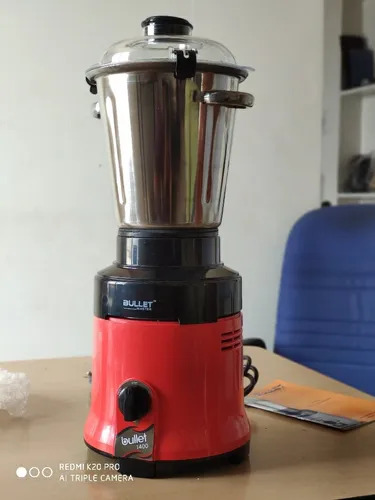
Price 8999 INR / Piece
Minimum Order Quantity : 1 Piece
Application : Personal and Commercial
Power Source : Electric
Capacity : 5 Ltr
Material : Other, ABS Plastic

 Send Inquiry

 Send Inquiry