


Talk to us
08071791510
Talk to us
08071791510
Industrial vegetable cutting machines are cornerstone technologies in the modern food processing, commercial catering, and agricultural value-addition sectors. As global demand for ready-to-eat salads, frozen convenience foods, and precisely portioned culinary ingredients continues to scale, the engineering behind these machines has evolved from basic mechanical slicers into highly sophisticated, automated systems.
Achieving high-throughput processing while maintaining the structural integrity, freshness, and precise geometry of diverse organic materials requires a delicate balance of mechanical force, material science, and sanitary design. This comprehensive document provides an exhaustive, 5,000-word technical analysis of industrial vegetable cutting machines, structured across seven core foundational pillars.
The architectural configuration of a vegetable cutting machine dictates its operational capabilities, throughput limits, and the specific geometries it can produce. Industrial machines are broadly categorized based on their mechanical movement, blade orientation, and the kinematic principles used to shear organic tissue.
Centrifugal cutting machines utilize an internal impelling mechanism that rotates within a stationary, cylindrical cutting drum lined with cutting knives. The product enters the center of the drum vertically.
As the impeller spins at high angular velocities (typically between 300 to 900 RPM), centrifugal force drives the vegetables outward, pressing them firmly against the inner wall of the drum. The impeller paddles then push the vegetables across the stationary knives.
Kinematic Action: The primary cutting force is derived from the kinetic energy transferred from the impeller to the product, utilizing the product's own mass against the cutting edge.
Primary Application: Ideal for uniform, high-capacity slicing, shredding, and dicing of firm, round, or elongated commodities such as potatoes, onions, carrots, and radishes.
Mechanical Advantage: Minimizes product damage by eliminating external feeding pressure; gravity and centrifugal force handle the material orientation.
Rotary disk slicers feature a large, flat, or slightly conical rotating plate mounted with one or more cutting knives. The vegetables are fed through an angled hopper or chute, either by gravity or a continuous mechanical feed mechanism.
As the disk rotates around a central shaft, the knives pass across the bottom of the feed chute, shearing a cross-section of the vegetable with every rotation.
Kinematic Action: A planar, rotational shearing action where the cutting velocity varies radially along the blade length.
Primary Application: Producing flat, crinkle, or corrugated slices of elongated vegetables like cucumbers, zucchini, eggplants, and leeks.
Mechanical Advantage: Highly adaptable. By changing the disk or adjusting the blade clearance relative to the disk face, operators can quickly vary slice thickness.
Belt-fed linear cutters utilize a synchronized dual-conveyor system. A lower feed belt transports the vegetables toward the cutting zone, while an upper hold-down belt (often called a compression or "smart" belt) gently secures the product from above to prevent shifting or rolling.
At the discharge end of the belts, a heavy-duty cutting headconfigured either as a rotating wheel with multiple radial knives or a reciprocating guillotine bladeslices the product as it emerges from the belt envelope.
Kinematic Action: Linear advancement combined with perpendicular or diagonal rotary/reciprocating shearing. The ratio between the belt speed and the cutting head speed determines the length of the cut piece.
Primary Application: Processing leafy greens (spinach, cabbage, lettuce), herbs, celery, and rhubarb, where maintaining product orientation is critical for uniformity.
Mechanical Advantage: Unmatched flexibility for long-form or leafy materials, allowing continuous, non-destructive processing of bulky materials.
For three-dimensional cubical or rectangular cuts (dicing and french fry strip cutting), a multi-dimensional cutting grid is required. The machine typically uses a continuous mechanical ram, a hydraulic piston, or a two-stage centrifugal feed to force the product through a fixed grid of intersecting, razor-sharp blades (the dicing matrix), followed immediately by a rotating cross-cut knife that shears the emerging strips into cubes.
Kinematic Action: Sequential or simultaneous multi-axis shearing. Axis 1 cuts the thickness, Axis 2 (the grid) cuts the width, and Axis 3 (the cross-cut blade) cuts the length.
Primary Application: Heavy-duty production of diced tomatoes, peppers, root vegetables, and fruits for canning, freezing, or salsa production.
Mechanical Advantage: Produces highly precise geometric shapes with minimal dimensional variance, ensuring uniform cooking times and aesthetic consistency in consumer products.
An industrial vegetable cutting machine is an integration of heavy mechanical elements, precise cutting tools, and robust power transmission systems. Every component must be engineered to withstand continuous moisture, acidic or alkaline vegetable juices, and high dynamic loads.
The foundation of any industrial cutter is its structural frame. Standard commercial machinery utilizes fully welded 304 grade or 316 grade stainless steel tubular or plate chassis.
Wall Thickness and Rigid Construction: To prevent harmonic vibrations generated by high-speed cutting heads (which can lead to blade deflection, premature bearing failure, and uneven cuts), frames are constructed using heavy-gauge steel (typically 3mm to 5mm thickness).
Sanitary Geometry: Round tubing is preferred over square tubing to eliminate flat surfaces where water can pool. All structural welds are continuous, ground smooth, and blended to eliminate micro-crevices that could harbor bacterial biofilms. Frames are designed with a minimum slope on all horizontal planes to facilitate self-draining during washdown cycles.
The transmission of mechanical energy from the electric motor to the cutting assembly requires high torque precision and variable speed management.
Motors: High-efficiency, washdown-duty, totally enclosed fan-cooled (TEFC) or totally enclosed non-ventilated (TENV) induction motors are standard. These motors carry an Ingress Protection rating of IP66 or IP69K, ensuring they can withstand high-pressure, high-temperature sanitization procedures.
Variable Frequency Drives (VFDs): VFDs are integrated into the control system to modulate motor frequency (Hz), enabling precise control over cutting blade RPM and conveyor belt speeds. This allows operators to fine-tune the cutting profile based on the turgor pressure and moisture content of the specific vegetable batch.
Drive Mechanisms: * Direct-drive systems utilizing synchronous timing belts or helical gearboxes are preferred over standard V-belts. They eliminate slip, maintain perfect timing between feeding and cutting, and do not produce carbon dust contaminants.
Overload Clutches / Torque Limiters: Integrated into the main drive shaft, these mechanical safety devices instantly disengage the motor if a foreign object (like a rock or piece of metal from the field) enters the cutting chamber, protecting the expensive blade assemblies from catastrophic failure.
Because these machines operate in highly corrosive, wet environments, standard industrial bearings are unsuitable.
Bearing Construction: Double-sealed, lubricated-for-life spherical roller bearings or deep-groove ball bearings housed in stainless steel or thermoplastic pillow blocks are used.
Sealing Systems: To prevent water ingress and grease migration into the food zone, engineers deploy multi-stage sealing arrangements, including Labyrinth seals, Viton lip seals, and mechanical shaft seals with food-grade synthetic lubricants (H1 category registered by NSF).
Efficient cutting depends significantly on how the product enters the cutting zone.
Vibratory Hoppers: Utilize electromagnetic or mechanical eccentric drives to singulate and evenly distribute bulk vegetables before they hit the feed belts, preventing product bridging and clogging.
Chutes and Hoppers: Engineered with precise drop angles lined with ultra-high-molecular-weight polyethylene or dimpled stainless steel to optimize product sliding and eliminate sticking.
The point of contact between the machine and the vegetable tissue is where the physics of cutting takes place. The design, material composition, and sharpness of the knife blade determine both the visual quality of the final cut and the shelf-life of the processed vegetable.
Industrial blades must maintain an ultra-sharp edge under continuous abrasive wear while remaining resistant to pitting and staining from organic acids.
Martensitic Stainless Steels: The industry standard is high-carbon martensitic stainless steel. These alloys contain high chromium content for corrosion resistance, combined with sufficient carbon to allow heat treatment to high hardness levels.
Hardness Ratings: Blades are vacuum-hardened and cryogenically tempered to a Rockwell hardness . If the blade is too soft, the edge rolls quickly, causing cellular tearing rather than shearing. If it is too hard, the blade becomes brittle and can chip if it hits a dense vegetable core or a stray stone.
Surface Coatings: High-performance operations apply advanced surface coatings via Physical Vapor Deposition (PVD). Coatings like Titanium Nitride (TiN) or Diamond-Like Carbon (DLC) reduce friction coefficients, minimize starch build-up on the blade face, and extend edge life.
The geometry of a blade cross-section determines how much force is required to penetrate the vegetable tissue and how wide the blade pushes the cut slices apart (known as the kerf effect).
Single-Bevel (Chisel) vs. Double-Bevel Edges:
Single-bevel blades feature a flat side and an angled side. They are used in precise slicing disks where the flat face runs parallel to the cut surface of the vegetable, ensuring straight, un-deflected slices.
Double-bevel blades feature symmetric angles on both sides and are standard in high-speed rotary wheels and dicing grids where balanced forces on both sides of the blade prevent deflection.
Bevel Angle Profiles: The included angle of the cutting edge typically ranges from $15\circ$ to $22\circ$. Lower angles are sharper and reduce cutting forces, making them ideal for soft, easily bruised materials like tomatoes or leafy greens. Higher angles offer more material backing support and are reserved for high-impact cutting of hard root vegetables like squash and carrots.
When a blade encounters a plant cell wall, it can either shear it cleanly or crush it via compressive failure. Clean shearing occurs when the blade edge radius is significantly smaller than the average diameter of the plant cell.
Cellular Integrity and Shelf Life: A sharp blade slices cleanly through the middle lamella and cellulose cell walls. This leaves adjacent cells intact, locking in moisture, natural sugars, and enzymes.
The Impact of Dull Blades: When a blade dulls, its edge radius increases. Instead of piercing, it exerts a high compressive force that crushes cells before fracturing the tissue. This cellular rupture releases intracellular fluids, including polyphenol oxidase (PPO). PPO reacts with atmospheric oxygen, accelerating enzymatic browning, creating off-flavors, and causing rapid wilting and microbial spoilage.
Crinkle and Wavy Cuts: Produced by using blades that have a sinusoids-profile or zig-zag corrugated geometry across their width. As the vegetable passes through, the apexes and valleys of the blade generate a three-dimensional wavy pattern. This increases the surface area of the cut piece, which is highly desirable for frying (better heat transfer and crispiness) and dressing retention in salads.
Julienne and Shredding Profiles: Achieved by adding vertical "spur" knives or tabs perpendicular to the main slicing edge. The main blade slices the thickness, while the trailing spurs cut the slice into narrow strips in a single pass.
Modern industrial vegetable cutting machines are highly integrated automated cells managed by sophisticated control electronics. These systems optimize throughput, ensure precise repeatability, and integrate seamlessly into broader factory networks.
At the center of the automated cutter is a high-speed Programmable Logic Controller (PLC) from manufacturers such as Allen-Bradley, Siemens, or Omron. The PLC executes control loops that regulate all operational parameters.
Human Machine Interface (HMI): Operators interact with the machine via a touchscreen HMI housed in an IP69K stainless steel enclosure. The HMI provides graphical control interfaces, diagnostic readouts, and multi-level password protection for operators, maintenance staff, and sanitation crews.
Recipe Management Matrix: Advanced machines allow operators to select pre-programmed recipes from the HMI memory. Selecting a recipe (e.g., "3mm Diced Onion" vs. "10mm Shredded Cabbage") automatically configures the system by adjusting the drive outputs to the exact calculated parameters required.
Industrial cutters rely on an array of sensors to provide real-time feedback to the PLC, ensuring consistent processing under variable product loads.
Photoelectric and Ultrasonic Sensors: Positioned above the infeed chutes, these sensors detect the volume and height of incoming vegetables. If a surge of material enters the hopper, the PLC can automatically increase the cutting head speed or modulate the feed belt to prevent clogging or inconsistent slice thickness.
Inductive Proximity Sensors: Installed at all critical structural joints, blade locking nuts, and access panels. These sensors monitor component alignment and verify that cutting heads are locked securely in position before allowing the motor to start.
Rotary Encoders: Closed-loop servo motors or high-resolution encoders on the transmission shafts feed exact speed data back to the VFDs. If the blade encounters a dense cluster of root vegetables that causes a momentary drop in RPM, the VFD instantly increases amperage to maintain constant cutting velocity, preserving clean cuts.
Modern processing facilities require interconnected equipment to optimize plant-wide efficiency.
Communication Protocols: Industrial cutting systems are equipped with communication ports .
SCADA and ERP Connectivity: This connectivity allows the cutter to transmit real-time data to supervisory control and data acquisition (SCADA) systems and enterprise resource planning (ERP) software. Transmitted metrics include overall equipment effectiveness (OEE), total runtime hours, electrical power consumption, and production throughput weights.
Predictive Maintenance Monitoring: Vibration sensors (accelerometers) are permanently mounted to the main spindle bearings. By analyzing vibration frequency spectra, the system can detect subtle signs of bearing degradation or blade imbalance long before a mechanical breakdown occurs. It then alerts maintenance staff through the HMI or automated email alerts.
In food manufacturing, equipment hygiene is as critical as mechanical performance. Vegetable cutting machines process wet materials containing starches, sugars, and organic matter, creating an environment highly susceptible to microbial growth if the machinery is not designed correctly.
High-capacity industrial cutters are designed to comply with strict international regulatory frameworks.
Approved Contact Materials: All surfaces that come into direct contact with food must be made of inert, non-porous, non-absorbent materials. Stainless steel grades 304 and 316 are universally used.
Surface Roughness Parameters : All food-contact surfaces are polished to a maximum surface roughness profile . This smooth surface finish prevents micro-particles from adhering to the metal and ensures that cleaning solutions can thoroughly rinse away organic residue.
Plastics and Elastomers: Components like conveyor belts, seals, and guide rails are fabricated from food-grade plastics like Blue polyurethane, acetal, or silicone rubber. These materials are formulated to resist degradation when exposed to harsh sanitizing chemicals like chlorine, peracetic acid, and caustic soda. The color blue is intentionally used because it does not match natural vegetable tones, making any damaged plastic fragments easily identifiable by optical sorting systems or visual inspection downstream.
Elimination of Internal Threads: Exposed threads inside the food zone are strictly prohibited, as they are impossible to clean mechanically. Where fasteners are required, designers use hygienic dome nuts with integrated blue EPDM gaskets that seal off the thread envelope completely.
Radiused Internal Corners: All internal corners and intersections within the cutting chamber must have a continuous, smooth radius . This prevents material build-up in tight corners and allows cleaning sprays to reach every surface.
Hermetic Components and Stand-off Mounts: Electrical enclosures, junction boxes, and pneumatic valves are mounted away from the main machine body using stainless steel stand-off brackets. This creates clear space behind the enclosures for sanitization crews to wash down the entire machine.
To reduce sanitation downtime, modern machines feature design optimizations that streamline cleaning workflows.
Tool-less Disassembly: Access doors, safety guards, feed belts, and blade disks are engineered with quick-release levers, captive swing bolts, and counterbalanced hinges. This allows sanitation personnel to fully expose the internal cutting chamber and strip the machine down to its core components in minutes without using hand tools.
Integrated Spray Manifolds: High-end dicers and linear cutters incorporate internal CIP spray lines. These stainless steel tubes feature precisely positioned micro-nozzles that inject high-pressure water and sanitizing solutions directly onto the blades, shafts, and internal walls while the machine runs at a slow, dedicated "cleaning speed."
Sealing Integrity Validation: All electrical enclosures must maintain an IP69K rating, meaning they can withstand close-range, high-pressure streams of hot water pressurized without any water entering the enclosure.
Because industrial vegetable cutters utilize heavy, high-speed, razor-sharp components driven by high-torque electric motors, machine safety is a primary engineering concern. Operating these systems requires rigorous safety systems to prevent operator injury.
Mechanical guards must be backed up by reliable electrical control circuits that instantly isolate hazardous energy when guards are opened.
Dual-Channel Safety Switches: Access doors, inspection ports, and discharge chutes are fitted with non-contact, tamper-proof RFID safety switches. Unlike old magnetic or mechanical tongue switches, RFID switches cannot be bypassed by operators using loose magnets or spare keys.
Monitored Safety Relays / Safety PLCs: The safety switches feed into a dedicated safety relay. The system utilizes dual-channel wiring architecture. If either channel fails, breaks, or shorts, the machine goes into a safe state and will not start.
High-speed cutting disks and heavy dicing wheels possess significant rotational inertia. When an operator hits the stop button or trips an E-stop, the cutting head could naturally coast for several minutes before coming to a complete rest.
Active Dynamic Braking: VFDs are configured with dynamic braking resistors. When a stop command is received, the VFD reverses the magnetic field in the induction motor, converting kinetic energy into heat through the resistor grid and stopping heavy cutting heads.
Zero-Motion Bolt Locks: For large cutters with extreme inertia, mechanical guard doors are fitted with solenoid-locking safety switches. The PLC keeps these switches locked shut until a zero-motion sensor on the main drive shaft confirms that the cutting wheel has reached a complete standstill.
Physical guarding must be designed to prevent human hands from ever reaching the cutting path.
Infeed Chute Geometry: Infeed hoppers are designed with extended tunnel lengths and protective baffles. The distance from the lip of the hopper to the cutting blade is calculated based on standard safety distance formulas . This ensures that even an operator with maximum arm reach cannot touch the moving blades from the outside.
Discharge Tunnel Curvature: The discharge chute features a downward bend or an angled trajectory that prevents a worker from reaching up into the machine from the bottom exit port.
Repetitive strain injuries (RSIs) and muscle fatigue are common hazards for operators running high-volume processing equipment.
Optimized Infeed Heights: Machines are designed with loading heights positioned between waist and chest level (typically 900mm to 1100mm above the finished floor). This minimizes shoulder strain during manual loading. For higher installations, integrated column dumpers or inclined lifters are used to automate hopper feeding entirely.
Lifting Assistance and Handling Tools: Heavy cutting disks are equipped with dedicated hoist ring attachment points or gas-strut assists on access hoods to minimize manual lifting strain. Manufacturers also supply custom storage carts and insulated handling keys that allow maintenance teams to remove and transport sharp blades safely during changeovers.
To maximize uptime and ensure a high return on investment, industrial vegetable cutters require structured maintenance protocols. Neglecting wear components leads to degraded cut quality, shortened shelf-life of products, and expensive mechanical failures.
A structured preventive maintenance schedule tracks component wear and ensures peak performance.
Visual Blade Inspection: Check all cutting surfaces for nicks, micro-cracks, or material buildup. Dull or damaged blades must be replaced immediately.
Sanitary Verification: Inspect the cutting chamber and belt paths to confirm that no sanitation residue or organic debris remains from the previous cleaning shift.
Safety Matrix Test: Individually trip each emergency stop and open each interlocked guard door to verify that the motor cuts out instantly and the active braking mechanism functions perfectly.
Conveyor Belt Tension and Tracking: Check feed and hold-down belts for proper tracking. If a belt runs off-center, it will wear against the stainless steel side guides, generating plastic shavings that can contaminate food. Measure belt deflection under a standard load to confirm it matches manufacturer specifications.
Drive Belt and Chain Inspection: Inspect drive belts for structural cracking or frayed cords, and check timing chains for link elongation. Adjust tension pulleys to eliminate slack.
Fastener Torque Auditing: Use a calibrated torque wrench to verify that blade locking bolts, motor mount fasteners, and bearing housing bolts are tightened to their specific engineering torque ratings.
Bearing Wear Analysis: Check for radial or axial play in the main drive shafts using a dial indicator. Rotate shafts manually to listen for grinding noises or resistance that indicates internal race pitting.
Electrical Enclosure Audits: Open VFD cabinets to check cooling fan operation, inspect internal air filters, and verify that all terminal wire connections remain tight and free of oxidation.
Seal Inspection: Examine shaft lip seals and door gaskets for cracking or compression set. Replace any seals that show signs of elastic degradation to prevent fluid ingress into dry mechanical bays.
Blades do not need to be discarded when they lose their edge; they can be systematically refurbished through precision grinding.
Coolant Selection for Precision Grinding: Always sharpen blades using a wet-flooded grinding system with an abundant flow of synthetic coolant. Dry grinding creates localized thermal spikes that exceed the material's tempering temperature. This alters the martensitic structure of the steel, leaving soft spots along the cutting edge that dull quickly.
Preserving the Factory Bevel: The grinding fixture must be set to match the original factory bevel angle . Altering this angle changes the cutting forces required and can cause product tearing or blade chatter.
Honing and De-burring: Grinding creates a thin metal burr along the cutting edge. This burr must be carefully removed using a fine ceramic stone or diamond honing paste applied in a trailing direction away from the edge. A blade reinstalled with a burr will drop that metal sliver into the first batch of processed food.
Dynamic Balancing Verification: High-speed cutting disks and rotary blade wheels must be checked on a dynamic balancing rig after grinding. Uneven metal removal across blades causes an asymmetrical mass distribution, generating centrifugal imbalances that cause high-frequency vibrations during operation, destroying bearings and shafts.
When a machine fails to meet performance or quality specifications, maintenance teams can refer to this standardized diagnostic table to quickly isolate and resolve the root cause:
| Operational Symptom | Potential Root Cause | Diagnostic & Rectification Protocol |
| Vegetable slices are ragged, frayed, or show severe browning along the cut edge. |
1. Severe blade dullness or edge rolling. 2. Incorrect blade bevel angle profile. 3. Insufficient cutting velocity relative to material tissue density. |
1. Remove blade assembly and measure edge radius; replace or regrind if radius exceeds spec. 2. Check VFD parameters on HMI; increase cutting head RPM to optimize shearing velocity. |
| Diced cubes show high dimensional variance or irregular shapes. |
1. Infeed conveyor belt slipping under load. 2. Product shifting in the feeding chute due to worn hold-down belts. 3. Cross-cut blade out of sync with feed speed. |
1. Check infeed belt tracking and increase tension to eliminate slip. 2. Inspect upper compression belt suspension and replace worn springs. 3. Verify encoder feedback loops via PLC diagnostics to ensure belt/blade synchronization. |
| Excessive liquid/juice pooling in the discharge chute (high product bruising). |
1. Extreme product compression before cutting. 2. Cutting blades installed backward or upside down. 3. Processing over-ripe or low-turgor vegetables. |
1. Reduce down-pressure on the upper hold-down belt. 2. Check blade orientation; ensure the cutting bevel faces the correct direction of rotation. 3. Adjust VFD recipe settings to lower belt and knife speeds for delicate product lots. |
| High-frequency vibration and structural humming inside the cutting chamber. |
1. Cutting wheel or disk out of dynamic balance. 2. Primary spindle bearing failure. 3. Loose blade mounting fasteners. |
1. Immediately shut down machine and lock out power. 2. Inspect all blade locking bolts with a torque wrench. 3. Check main spindle bearings for axial play; replace bearing blocks if pitting or wear is detected. |
| The machine motor stalls or VFD trips on Overcurrent when processing hard root vegetables. |
1. Feeding material volume exceeds cutting capacity. 2. Heavy starch or sugar buildup on the rear blade faces. 3. VFD acceleration/deceleration ramp profiles set too low. |
1. Decrease vibratory hopper feed rate to regulate input volume. 2. Clean blades using an enzymatic wash down to clear starch accumulation. 3. Adjust VFD settings to increase torque limit parameters for heavy processing modes. |
An industrial vegetable cutting machine is much more than a simple automated knife. It is a highly engineered system that brings together advanced metallurgy, precise mechanical synchronization, robust automation, and strict sanitary design.
By understanding the physics of shearing tissue, maintaining the exact geometric profiles of cutting blades, and enforcing strict preventive maintenance schedules, processing facilities can ensure consistent cut quality, maximize product shelf-life, and maintain total food safety.
Investing in high-quality mechanical configurations and automated control networks enables modern food producers to meet growing global production demands while protecting both their operators and the consumers who rely on their products.
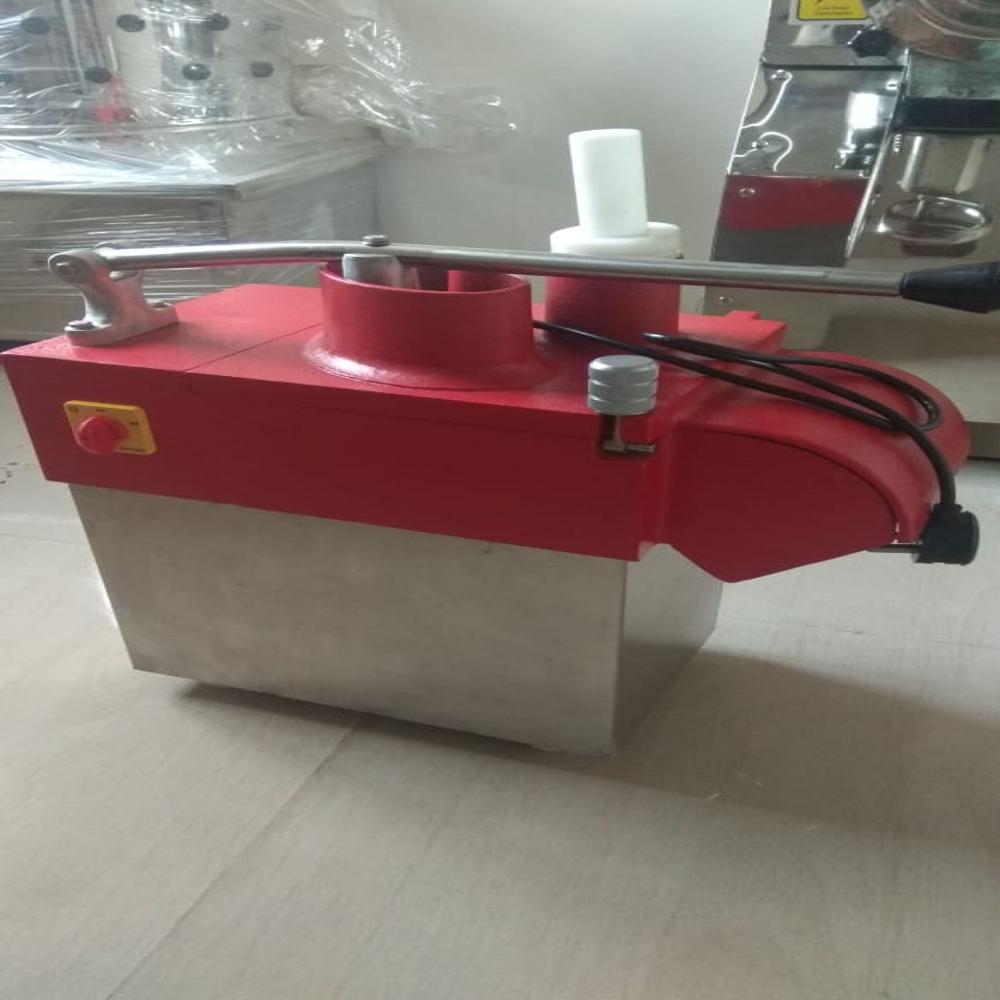
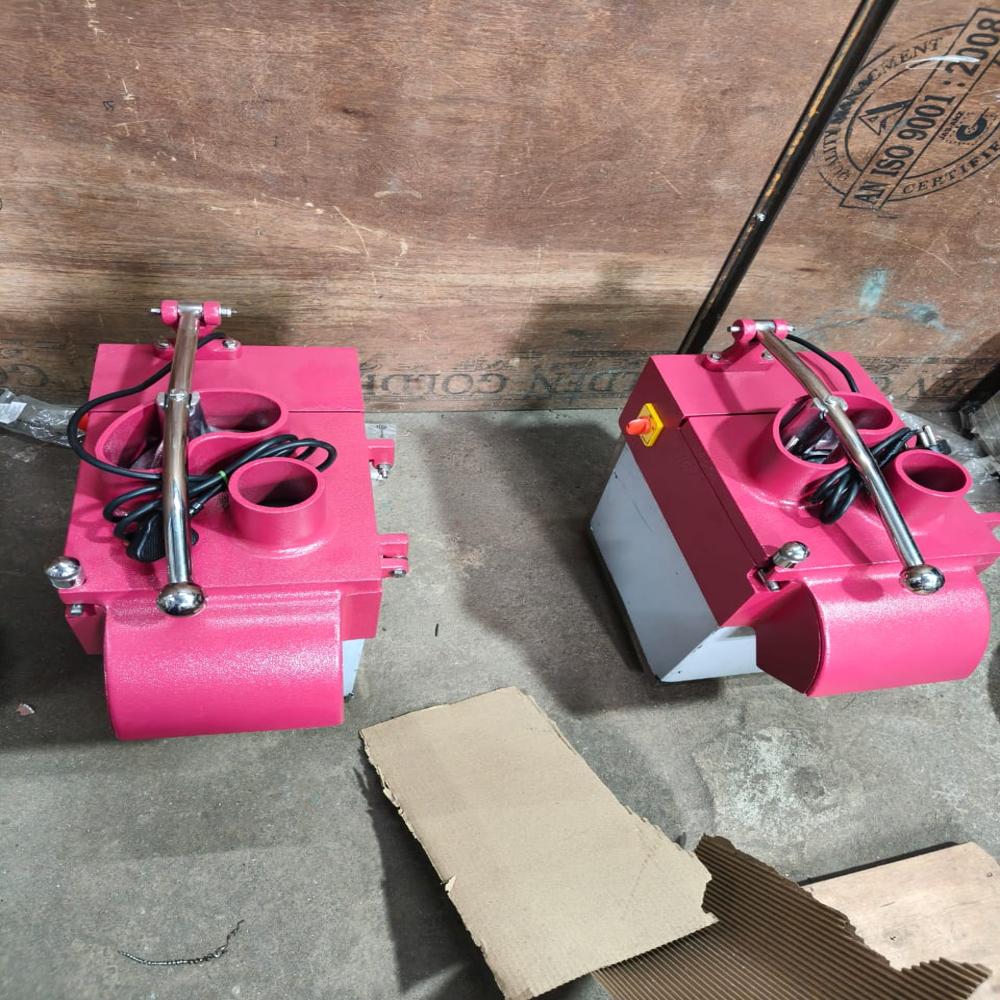


Price:
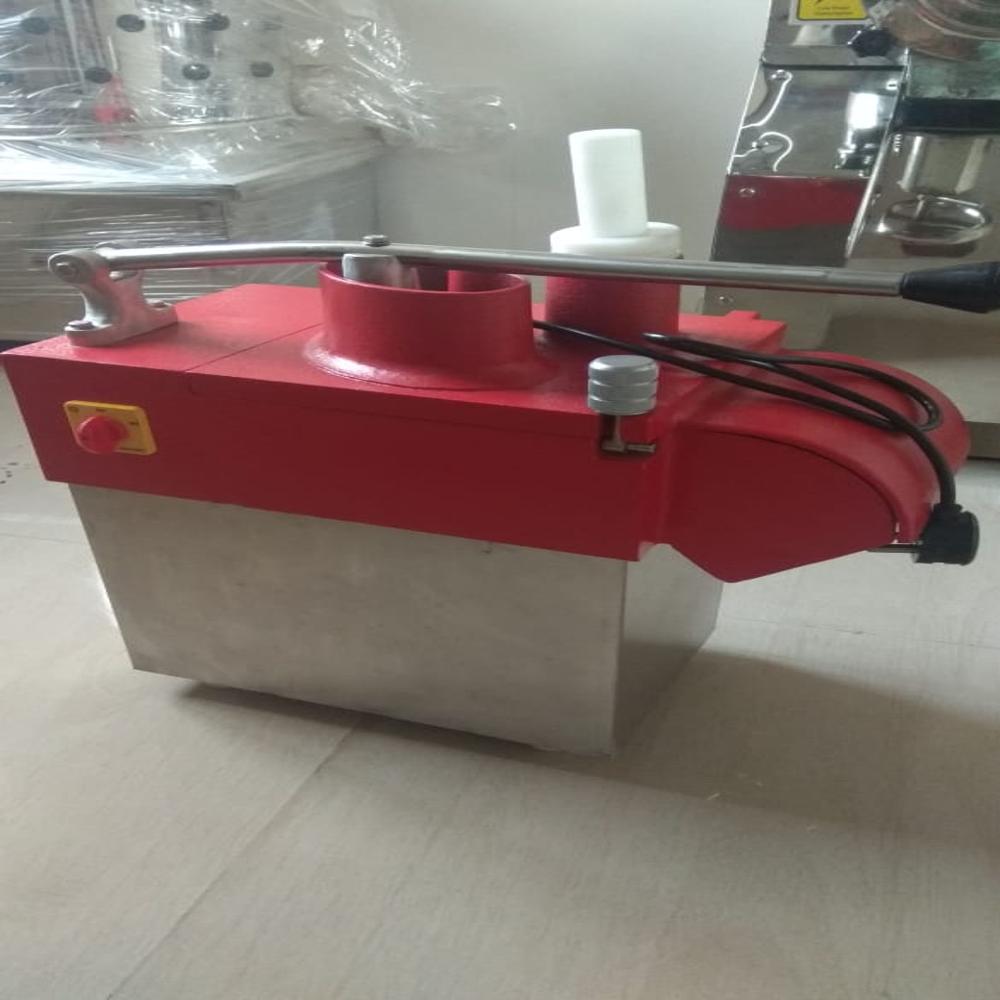
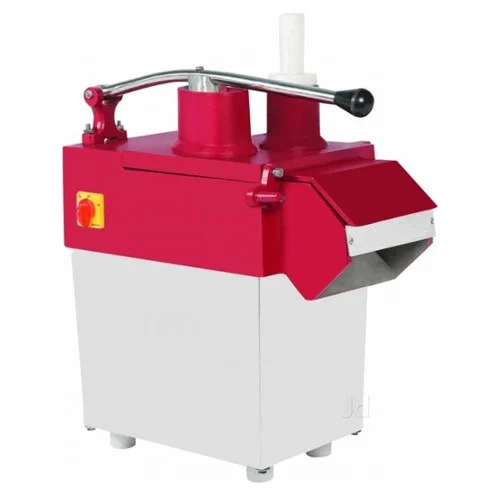
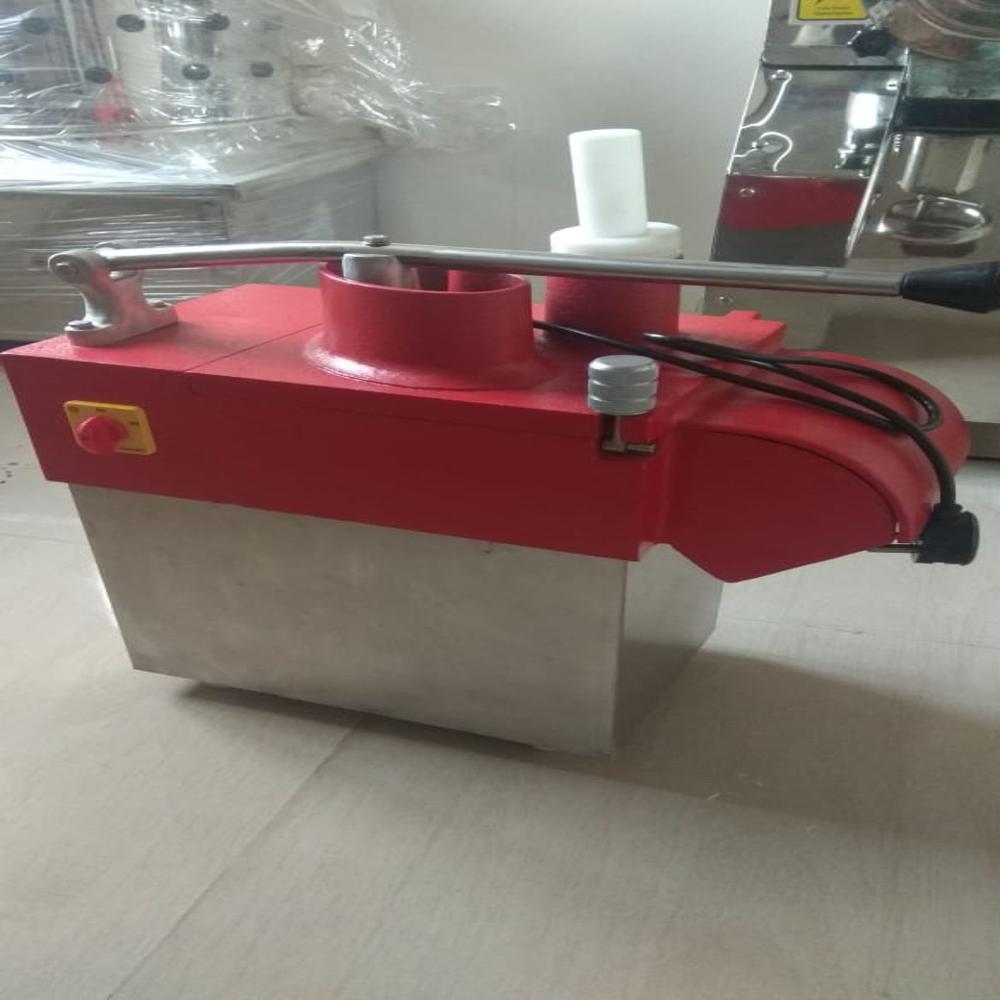
Price 17500.0 INR
Minimum Order Quantity : 1 Number
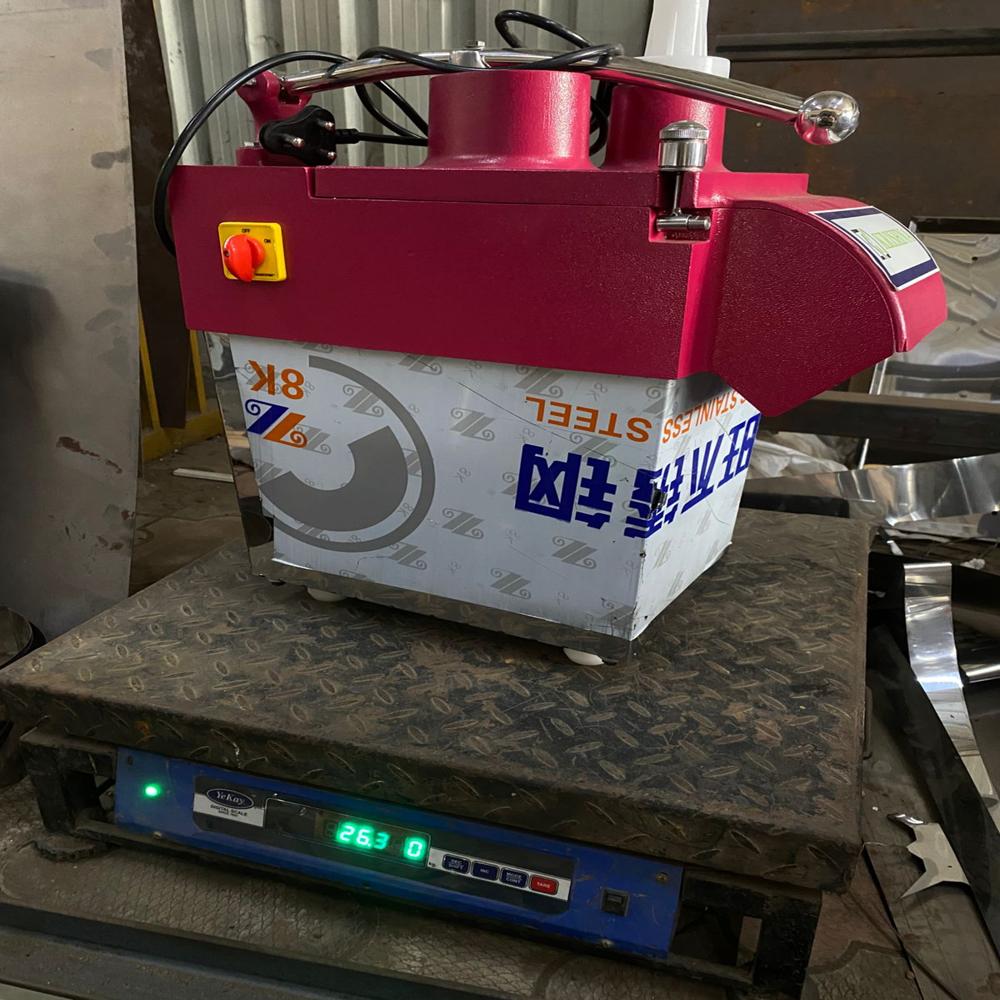
Weight (kg) : 26 Kilograms (kg)
Feature : Low Noise, Environmental Friendly, Good Quality, High Efficiency, Low Energy Consumption
General Use : VEGETABLE CUTTING
Color : Red
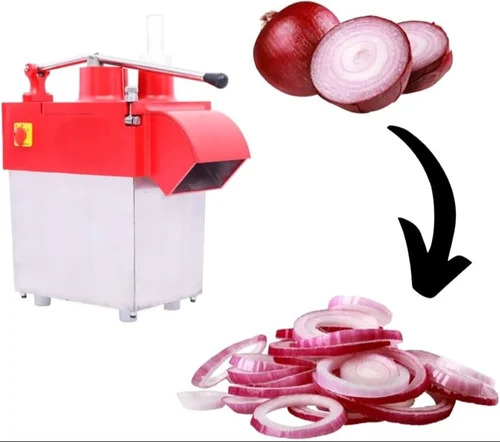
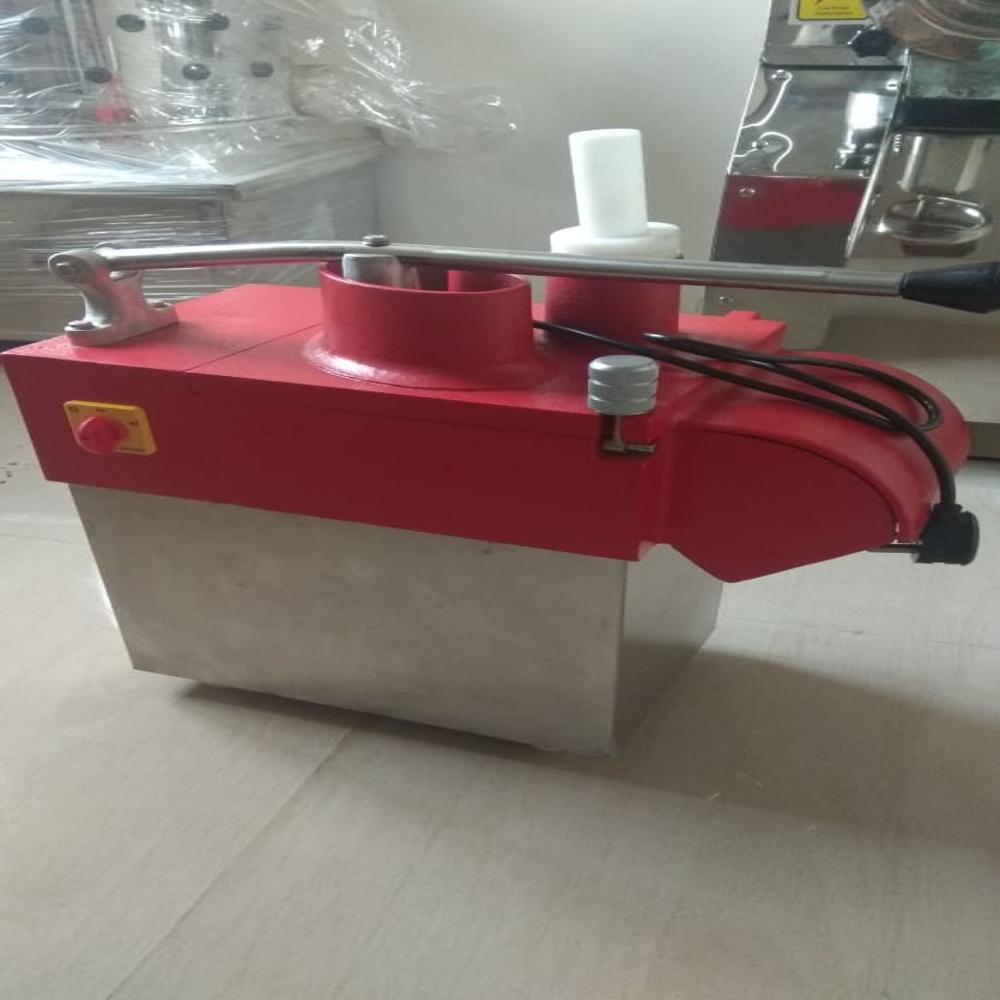
Price 17500.0 INR
Minimum Order Quantity : 1 Number
Weight (kg) : 26 Kilograms (kg)
Feature : Low Noise, Environmental Friendly, Good Quality, High Efficiency, Low Energy Consumption
General Use : ONION SLICING , VEGETABLE CUTTING
Color : Red

 Send Inquiry

 Send Inquiry