


Talk to us
08071791510
Talk to us
08071791510
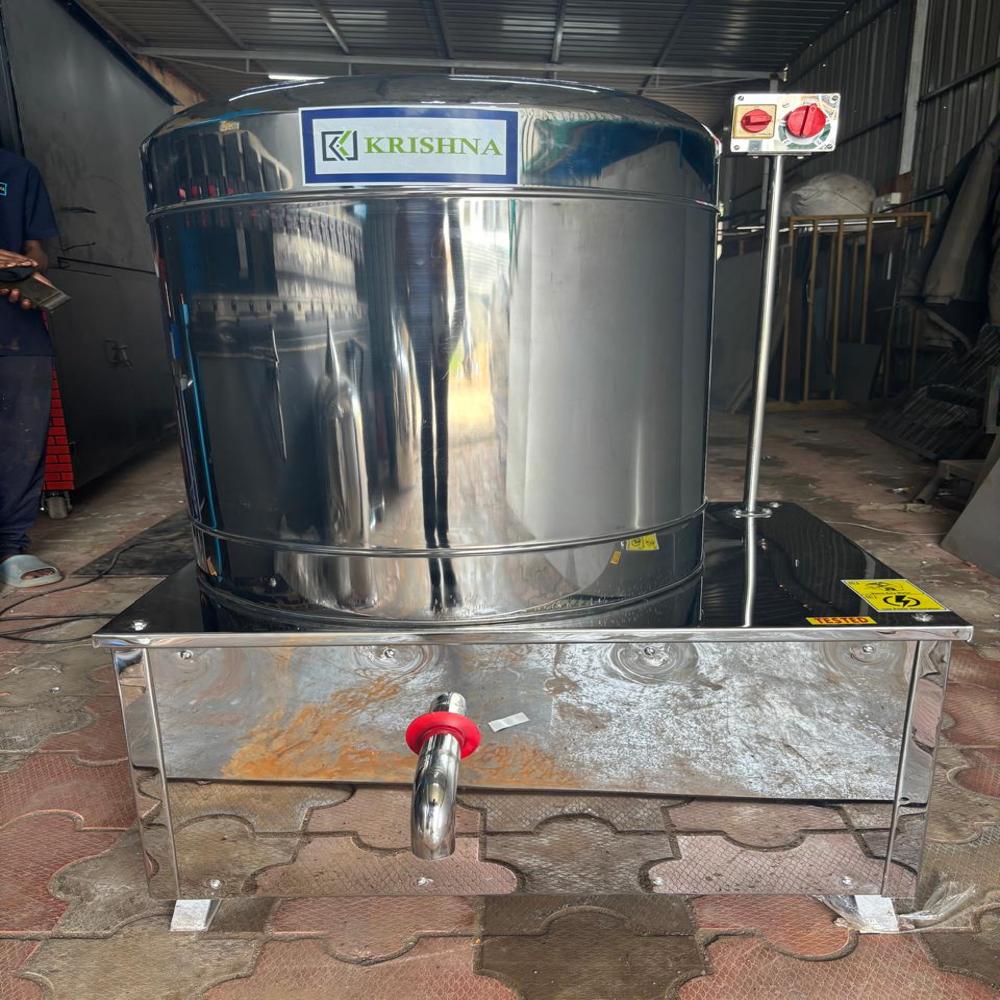
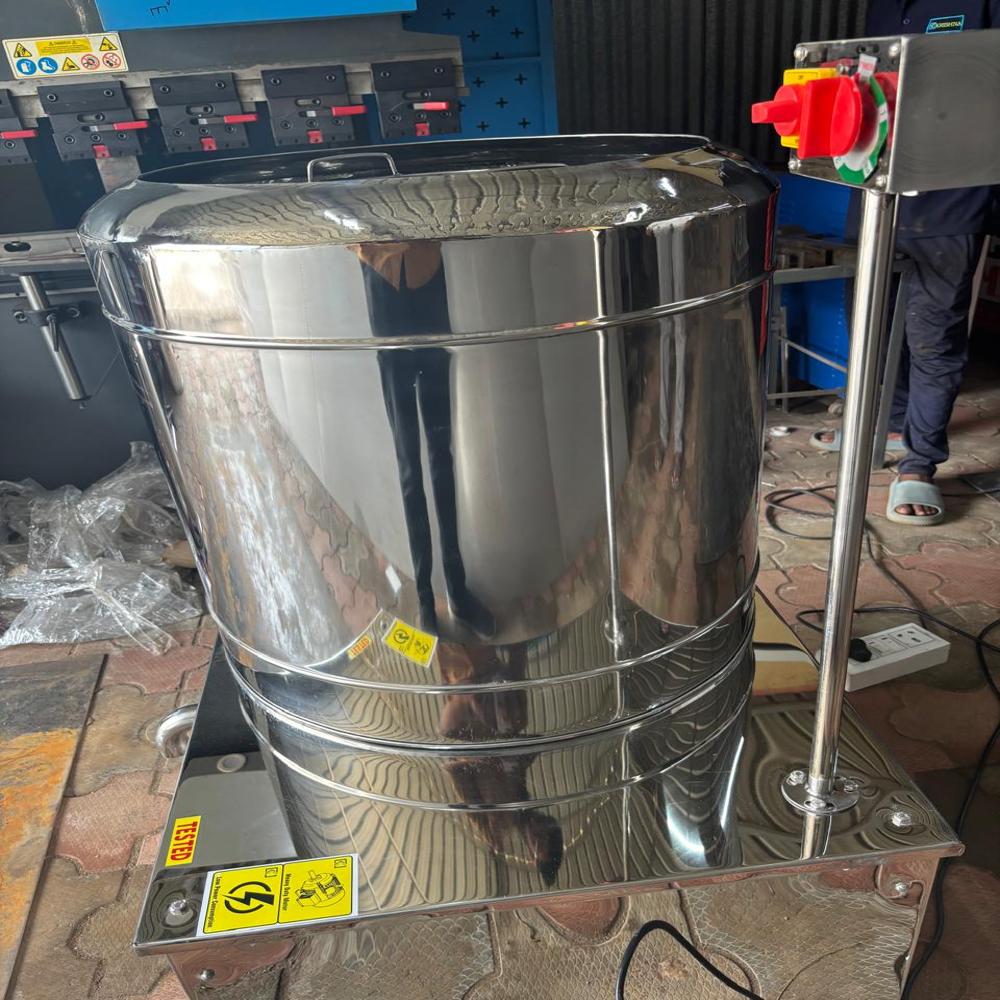
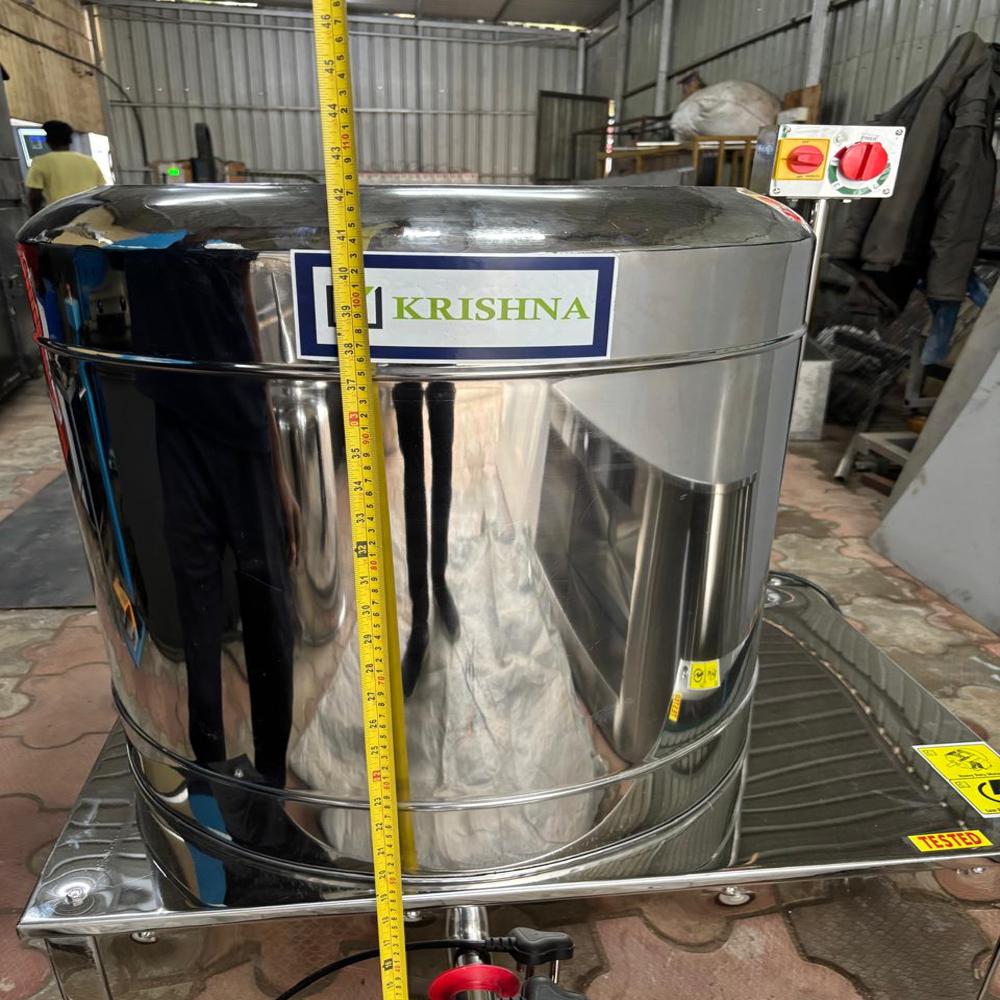
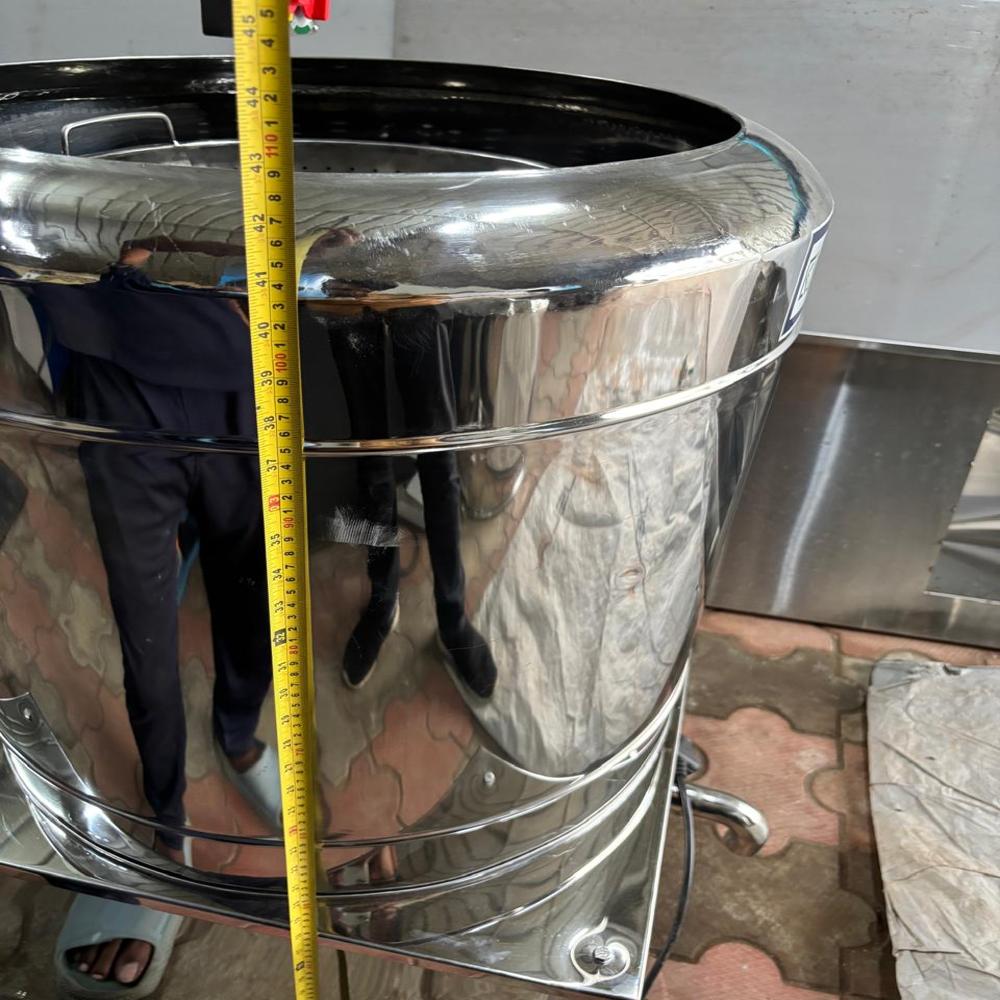
In industrial food processing, snack manufacturing, and commercial frying operations, the management of surface oil following a thermal cooking cycle is a foundational engineering challenge. Commonly referred to in the industry as an Oil Dryer, an Industrial Centrifugal De-oiler, or a Vibratory Post-Fry Treatment System, an oil dryer machine is engineered to rapidly remove excess surface oil from fried foods (such as potato chips, banana chips, namkeen, sev, fried nuts, and extruded snacks).
Allowing fried products to cool with unmanaged surface oil leads to serious quality, shelf-life, and financial penalties: the oil cools and absorbs back into the porous starch matrix, causing a soggy texture, greasy mouthfeel, and rapid rancidity due to lipid oxidation.
From an engineering perspective, an oil dryer machine leverages centrifugal force, fluid dynamics, thermal control, and precise structural mechanics to strip away surface oil while maintaining the structural integrity of delicate food shapes. This comprehensive technical guide analyzes the design, physics, control automation, and maintenance of industrial oil dryer machines across seven core pillars.
Industrial oil dryers operate in high-temperature, high-fat, and continuously moist environments. The structural engineering of these machines must withstand continuous mechanical stress while meeting strict food safety and sanitation regulations.
Because these machines rotate heavy batches of product at high velocities, the structural frame must be exceptionally rigid to prevent harmonic vibrations from traveling into the factory floor. The frame is fabricated using heavy-gauge SUS304 or SUS316 stainless steel square tubes.
Stainless steel provides the required mechanical yield strength and resists corrosion from free fatty acids (FFAs) found in hot cooking oils. All structural joints are continuously welded using precision TIG processes, then ground smooth to eliminate pinholes or crevices where organic oils could collect and become rancid.
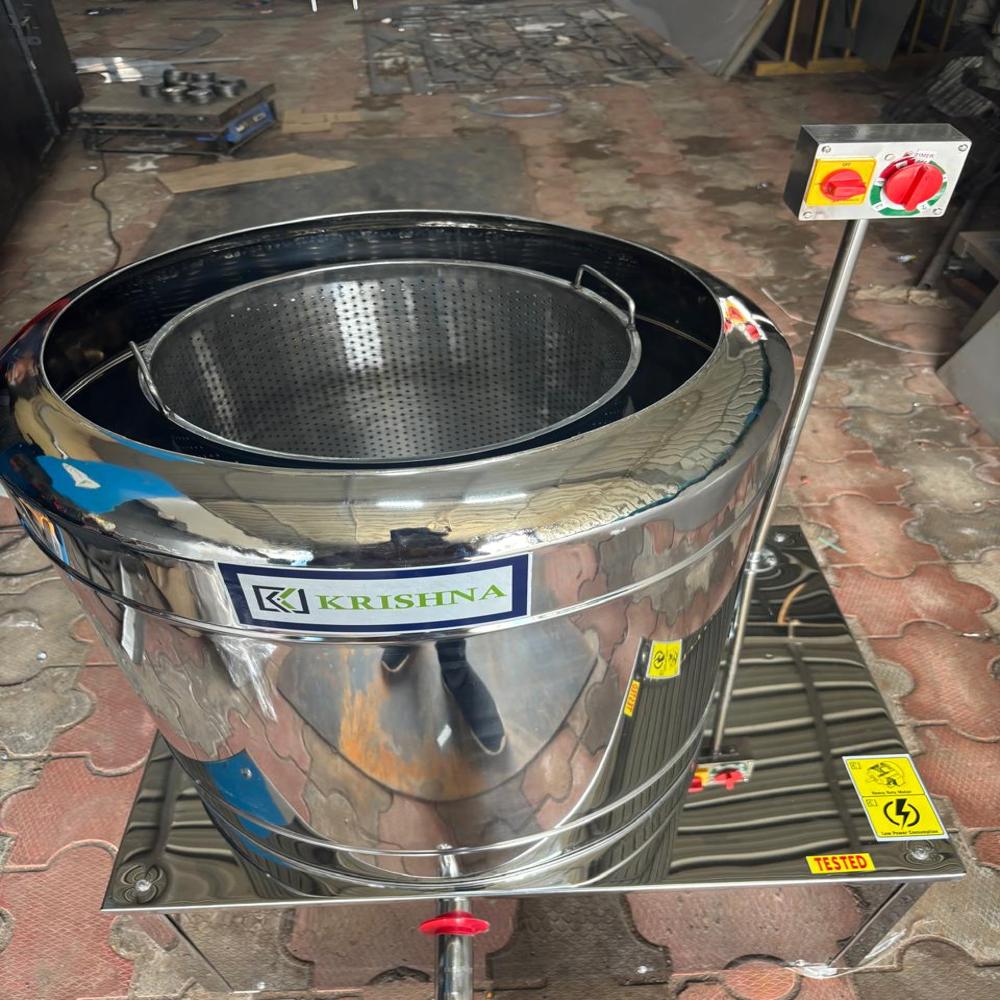
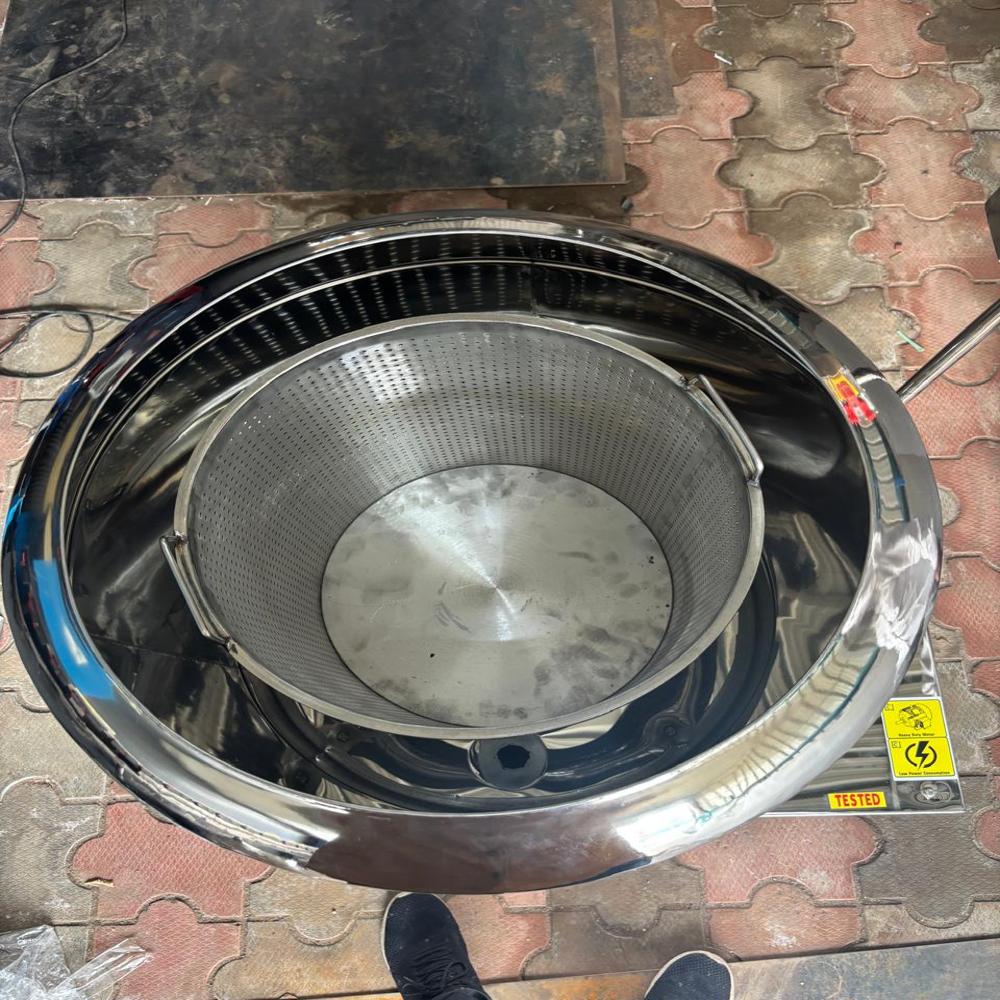
The core component that holds the product is a cylindrical basket. The walls of this basket are laser-perforated with hundreds of micro-slots or round holes. The diameter of these perforations is engineered based on the target product:
For Fine Products (Namkeen, Sev, Boondi): Small perforations prevent the product from passing through the walls.
For Larger Products (Potato/Banana Chips, Extruded Snacks): Larger perforations maximize the open surface area, accelerating oil discharge.
The interior surface of the basket undergoes electrostatic micro-polishing to achieve a mirror finish. This smooth surface minimizes friction, preventing delicate, brittle fried chips from breaking as they slide up the basket walls during spin cycles.
Spinning a batch of fried food can create an uneven distribution of mass inside the basket, leading to an unbalanced load. To manage these dynamic forces, industrial oil dryers incorporate a heavy-duty suspension system.
The spinning assembly is typically mounted on a three-point or four-point heavy-duty spring suspension combined with pneumatic or hydraulic shock absorbers. This design allows the core spinning housing to float independently from the outer structural frame. As a result, the suspension dampens and absorbs structural vibrations, preventing mechanical fatigue on the weldments and anchor bolts.
Surrounding the spinning basket is a stationary, double-walled outer jacket. This jacket acts as a containment shield for the oil droplets flung outward by centrifugal force.
The bottom floor of the jacket is sloped at a steep angle toward a sanitary tri-clamp drain outlet. This steep slope ensures that the extracted oil flows immediately out of the chamber instead of pooling on the bottom plate.
Depending on the production volume, product fragility, and line layout, industrial oil dryers are divided into distinct categories. Selecting the right configuration balances throughput speed against product handling care.
Batch systems are widely used in premium snack lines. The product exits the fryer and falls into a stationary basket. Once filled to a pre-set weight, the top lid locks pneumatically, and the motor accelerates the basket up to its target operational speed.
After a programmed spin cycle, the motor applies regenerative braking to halt rotation, a pneumatic bottom gate opens, and the de-oiled product discharges onto a cooling conveyor. This batch sequence protects product shapes because the ingredients remain stationary relative to the basket walls during acceleration.
For large-scale, automated production lines operating 24/7, batch cycles can introduce line delays. Continuous oil dryers solve this by using an inverted, perforated cone basket that spins continuously.
Product enters through a central feed chute at the bottom apex of the cone. Centrifugal force pushes the product upward and outward along the widening angle of the cone walls. As the ingredients climb, the surface oil is flung out through the perforations.
By the time the product reaches the upper lip of the cone, it is completely dry and discharges continuously over the rim into a collection plenum.
When processing extremely fragile or brittle products that cannot withstand any centrifugal force without shattering, facilities use non-rotational oil dryers. These machines consist of a linear, perforated stainless steel vibratory conveyor tray.
As the hot, oily product moves across the tray in a uniform, single layer, it passes beneath a series of high-velocity Air Knives. These knives blast a laminar sheet of heated air downward, stripping the surface oil away without damaging the product.
Simultaneously, a negative-pressure vacuum plenum beneath the vibratory tray sucks the removed oil downward into a recovery tank.
The operation of an oil dryer machine relies on classical rotational mechanics and fluid dynamics. To remove surface oil efficiently without crushing the food product, operators must carefully balance several physical forces.
The separation of oil from a solid food surface is driven by centrifugal acceleration . As the basket spins, the oil experiences an outward radial force that overcomes the surface tension holding the oil film to the snack.
For oil to detach from a food surface, the kinetic energy generated by the G-force must overcome the oil's surface tension and dynamic viscosity.
The dynamic viscosity of cooking oil is highly temperature-dependent. At room temperature , palm or sunflower oil is thick and viscous (, making it difficult to extract. However, at typical post-fry temperatures , the viscosity drops significantly, allowing it to flow and separate easily.
Consequently, industrial oil dryers must receive the product immediately after it exits the fryer, before the oil has time to cool and thicken. To maintain this low viscosity during the spin cycle, premium oil dryers feature integrated jacket heating elements (infrared or electrical resistance blankets) embedded in the outer enclosure housing. These elements maintain an internal air temperature , keeping the extracted oil fluid and preventing it from congealing on the chamber walls.
Operating an industrial centrifugal machine safely requires a well-engineered electrical architecture. Control systems must manage rapid motor acceleration, precise speed control, and electronic braking safely.
An oil dryer cannot use a simple direct-on-line start system; launching a motor instantly to high speeds would shatter fragile fried snacks against the basket walls. Instead, the motor is regulated by a heavy-duty Variable Frequency Drive (VFD) with a programmable S-curve acceleration profile.
The VFD is programmed with a multi-stage ramp sequence:
Soft-Start Phase (0 to 5 seconds): The motor slowly turns the basket . This gentle movement uses low centrifugal force to distribute the wet snack batch evenly around the perimeter of the basket, balancing the load before high-speed rotation begins.
Extraction Phase : The VFD accelerates the motor rapidly but smoothly up to its operational speed, holding it there for maximum oil separation.
Regenerative Braking Phase: To stop the high-inertia basket, the VFD reverses the motor's electromagnetic fields, turning the motor into a generator to slow the basket down quickly and safely.
Stopping a heavy, spinning stainless steel basket loaded with product generates a large amount of regenerative electrical energy, which flows backward into the VFD. If this energy is not managed, it will trigger an overvoltage fault and shut down the drive.
To safely dissipate this energy, the VFD is connected to an external, heavy-duty Braking Resistor Bank housed in a well-ventilated enclosure on top of the electrical panel. The resistor bank converts the returning electrical energy into heat, allowing the machine to come to a complete stop in under 5 seconds, which helps maintain high cycle counts per hour.
Because industrial oil dryers operate at high rotational speeds with heavy mechanical loads, they require robust, redundant safety features to protect operators and prevent mechanical failures.
The primary hazard for any high-speed centrifuge is an unbalanced load, which can occur if sticky or clumped food products settle on one side of the basket. To monitor this, modern oil dryers feature an integrated dual-axis analog accelerometer (vibration sensor) mounted directly to the floating bearing housing.
This sensor continuously monitors vibration velocity. The PLC is programmed with two distinct safety thresholds:
Warning Threshold : If vibrations exceed this limit, the PLC logs a warning on the HMI and automatically reduces the spin speed for the next cycle.
Critical Fault Threshold : If a severe imbalance occurs, the sensor trips a critical fault. The PLC bypasses the standard spin cycle, cuts power to the drive, and applies emergency braking to stop the machine safely before structural damage can occur.
Pneumatic Lid Safety Locks: The top access cover features a heavy-duty mechanical tongue safety switch equipped with an internal solenoid lock. When the basket is spinning, the PLC energizes the solenoid to keep the lid physically locked down. The lid can only be opened when a digital tachometer confirms the basket has reached a complete stop .
Pneumatic Pressure Drop Protection: The machine uses pneumatic cylinders to operate its loading and unloading gates. If the facility loses compressed air pressure unexpectedly, mechanical safety check valves lock the cylinders in their current position, preventing gates from dropping open during a live spin run.
Explosion-Proof Motor Enclosures: Hot oil vapor can create a challenging atmospheric environment over time. Industrial oil dryers use ATEX/CE certified explosion-proof or washdown-duty motors (typically Totally Enclosed Fan Cooled, TEFC, with Class F insulation) to eliminate any risk of electrical sparking.
Cooking oils oxidize quickly when exposed to heat and air, forming a sticky, varnish-like residue. If this residue is allowed to build up, it can clog basket perforations, unbalance the machine, and create food safety compliance risks. Maintaining equipment uptime requires a disciplined maintenance and sanitation routine.
Because oil dryers process ready-to-eat snack items, they must be cleaned thoroughly at the end of every production shift. Many premium industrial oil dryers come equipped with a built-in Clean-In-Place (CIP) manifold system.
Every Shift: Check that the oil drain pipe is free-flowing and clear of crumb blockages. Verify that the pneumatic lid safety lock functions correctly.
Weekly: Inspect the main drive belts for signs of cracking or stretching; improper belt tension can cause slippage during rapid acceleration, extending cycle times. Check the tightness of all suspension spring mounting bolts.
Monthly: Use a high-temperature grease gun to lubricate the main spindle bearings through external zerk fittings, using food-grade H1-certified high-speed grease. Check the wear pads on the vibration isolation dampers.
Bi-Anually: Inspect the main shaft oil seals located right below the basket hub. If these seals wear out, hot oil will leak into the bearing housing, washing away the grease and causing bearing failure. Replace worn seals immediately.

Price:

 Send Inquiry

 Send Inquiry