


Talk to us
08071791510
Talk to us
08071791510
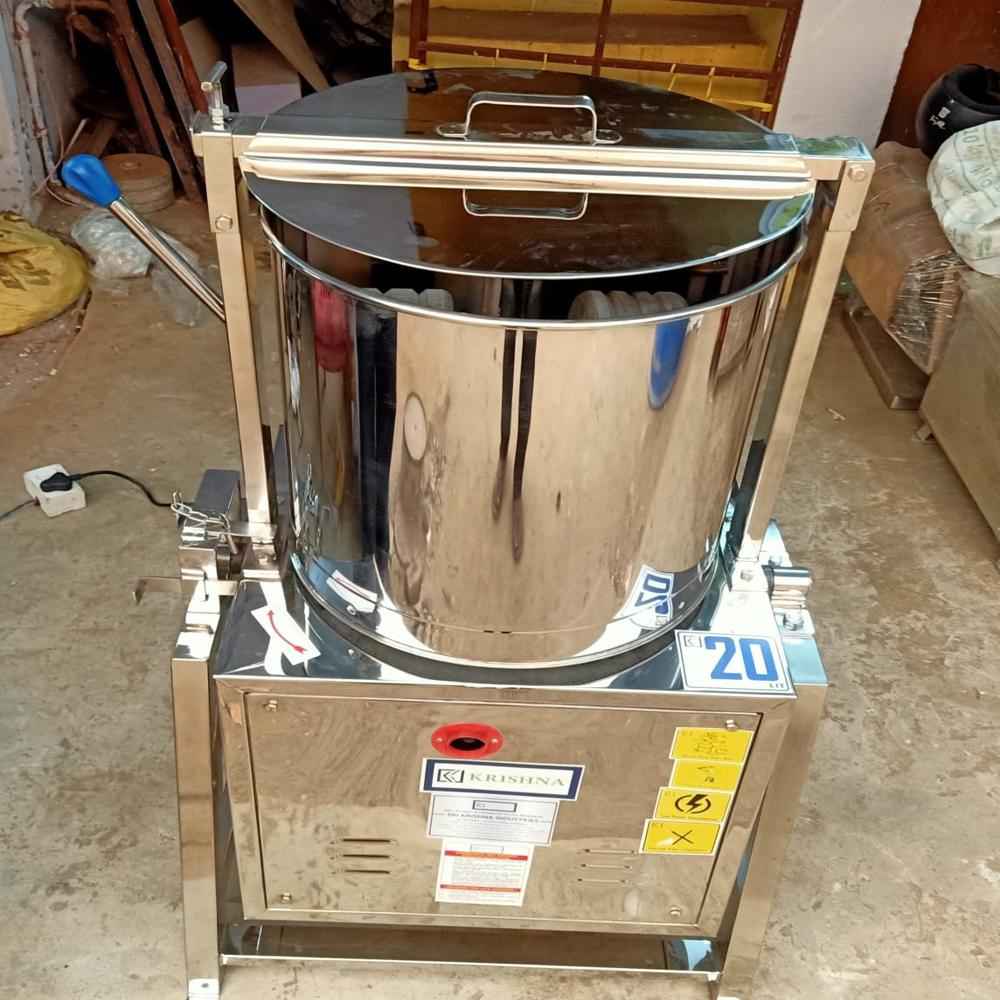
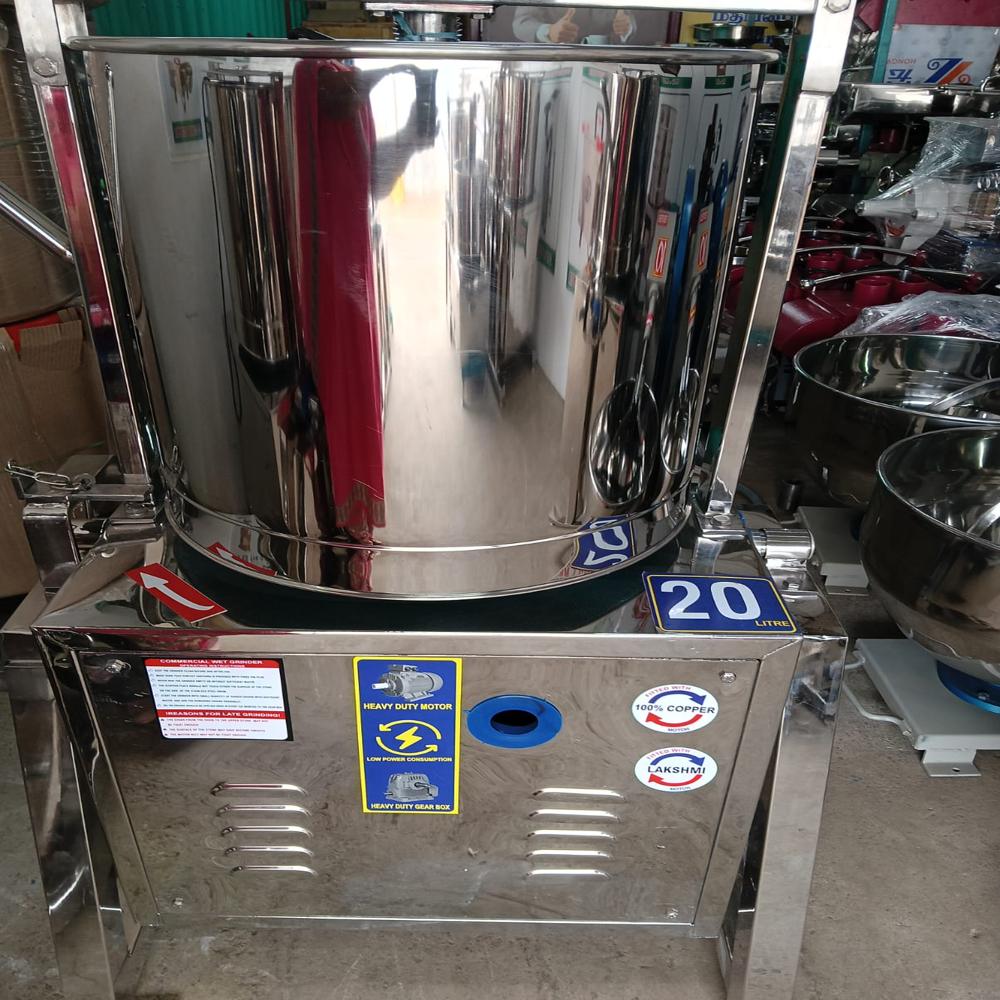
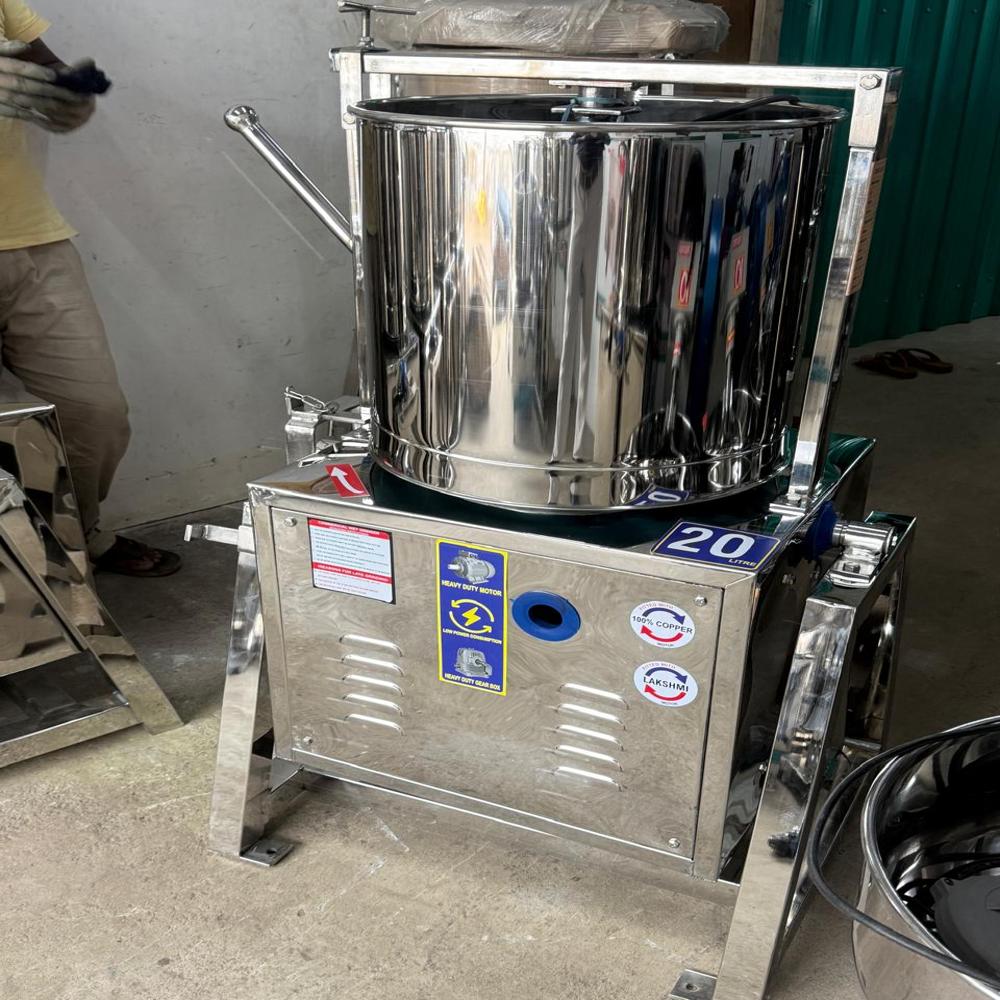
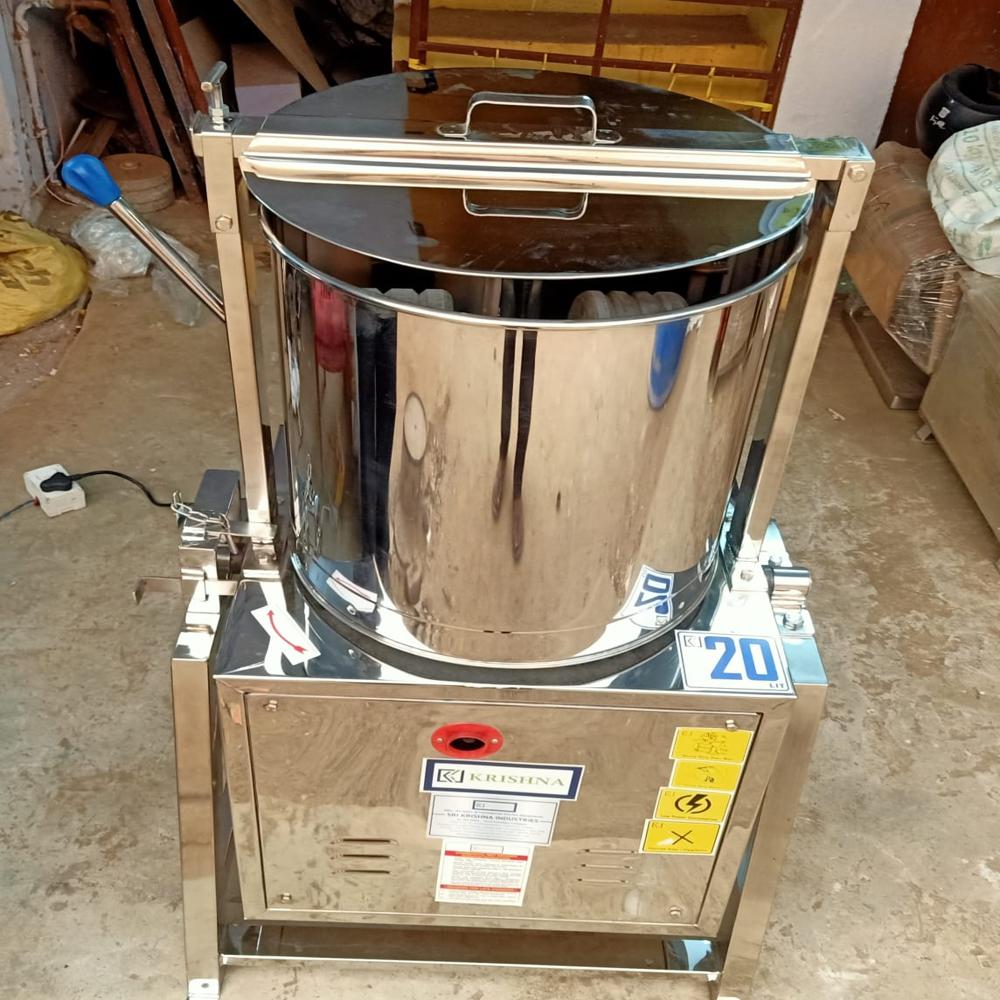
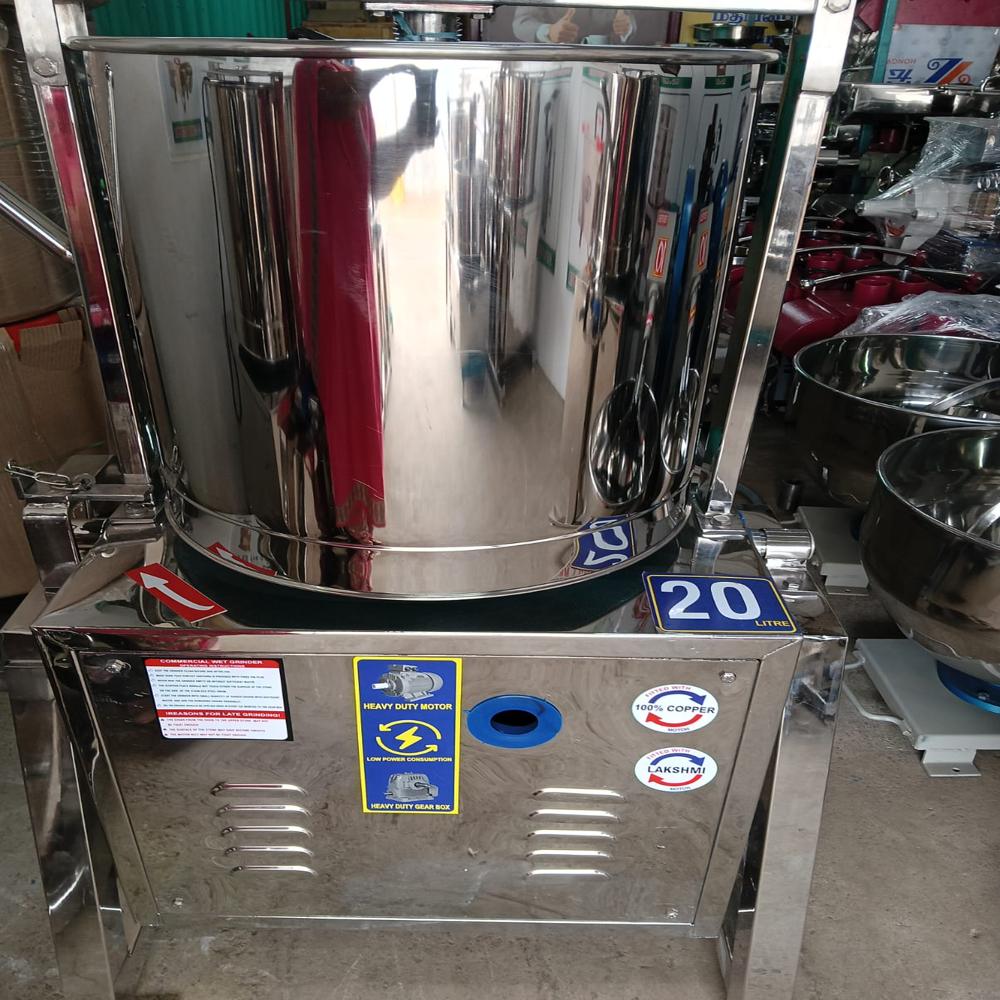
The 20-Liter Industrial Tilting Wet Grinder represents the upper echelon of commercial food processing machinery, designed strictly for high-volume production in commercial kitchens, industrial canteens, catering units, and central batter manufacturing facilities. At a 20-liter processing capacity, the physics of wet grinding shifts from basic mechanical mixing to heavy-duty structural engineering.
When a machine is tasked with spinning up to 80 kg of combined steel, granite, water, and dense grain mass, standard appliance designs fail. Every componentfrom the foundational A-frame chassis to the electrical switchgearmust be engineered to withstand immense torsional stress, continuous heat generation, and constant exposure to water.
The following sections provide a detailed engineering and operational breakdown of the 20-liter tilting wet grinder, organized into seven core dimensions.
The physical architecture of a 20-liter wet grinder is dominated by its foundational frame. Unlike smaller units, a 20-liter capacity machine cannot rely on sheet metal enclosures or lightweight tubing. It requires a heavy-duty, structural-grade exoskeleton to maintain absolute rigidity under massive dynamic loads.
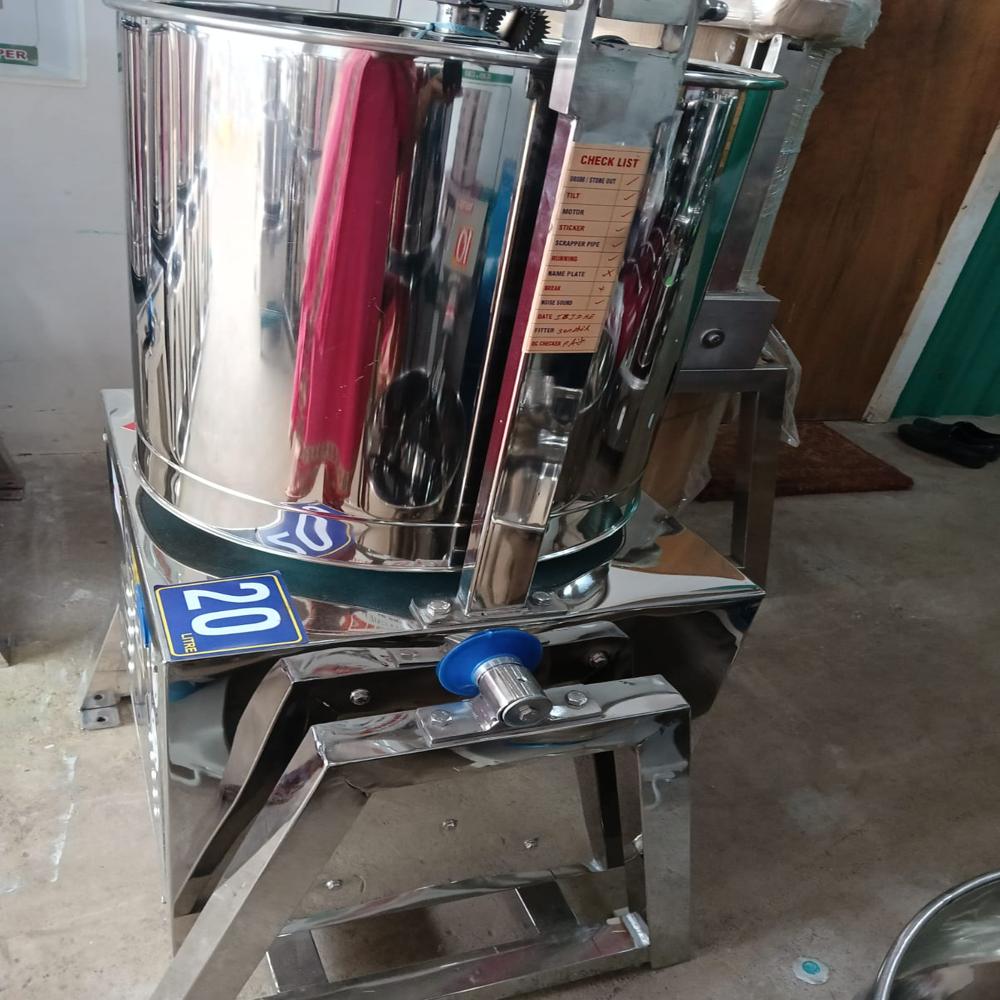
The skeleton of a professional 20-liter grinder is typically fabricated from 304 Stainless Steel square hollow sections (SHS). The frame is assembled using full-penetration structural welding, creating an "A-frame" or rectangular box design. This geometry prevents the frame from twisting or warping when the motor delivers high starting torque to a drum packed with dry, unground rice.
To survive the harsh environment of a commercial washdown zone, mild steel frames are sandblasted and coated with multiple layers of anti-corrosion zinc-chromate primers, followed by a heavy coat of industrial polyurethane or epoxy paint. Stainless steel frames undergo a passivation process to ensure complete resistance to organic food acids and chlorinated cleaning agents.
Evacuating up to 20 liters of thick, highly viscous batter requires a flawless tilting mechanism.
Pillow Block Bearings: The drum assembly is suspended on a solid, high-tensile steel shaft supported on both sides by heavy-duty pillow block ball bearings (such as UCP series bearings). These bearings are equipped with grease nipples for easy maintenance and are rated for loads far exceeding the machines operational weight.
The Counterbalance Factor: The pivot axis is mathematically aligned with the center of gravity of the fully loaded drum. This counterbalanced design ensures that even though the total tilting mass can exceed 90 kg (stones + drum + batter), an operator can tilt the drum smoothly to a full 100-degree angle using minimal physical effort.
Locking Mechanisms: To prevent accidental tipping during high-speed grinding, the frame features a dual-locking system: a spring-loaded primary indexing pin combined with a heavy-duty, threaded mechanical hand-wheel that clamps the tilt shaft completely rigid.
At a commercial scale, food contact surfaces must be completely inert and exceptionally durable. The 20-liter tilting grinder utilizes a composite material approach, combining premium food-grade alloys with specialized natural stone blocks to deliver maximum hygiene and wear resistance.
The drum of a 20-liter grinder is a massive cylinder fabricated from 10 to 12 gauge (2.5mm to 3.0mm thickness) AISI 304 stainless steel. This specific austenitic alloy contains roughly 18% chromium and 8% nickel, rendering it completely immune to oxidation from water and the natural lactic acids produced during extended batter fermentation.
The drum walls are deep-drawn or rolled and plasma-welded with absolute precision to ensure perfect circularity. The entire interior undergoes an automated mechanical polishing process to achieve a mirror-grade finish . This smooth surface reduces frictional drag, minimizes product adhesion during dispatch, and eliminates microscopic crevices where bacteria could multiply.
The bottom floor of the drum is lined with a thick, single piece of premium-grade, circular natural granite stone.
| Component | Engineering Standard | Operational Function |
| Granite Floor Base | Deep-quarried, zero-bore natural granite. | Provides a high-density, ultra-hard grinding surface that resists chipping or flaking under intense pressure. |
| Stainless Steel Outer Shell | Heavy-gauge AISI 304 jacket. | Encases the granite base completely to prevent liquid from seeping underneath the stone. |
| Interfacing Seals | High-density Teflon or food-grade Viton gaskets. | Seals the boundary between the stone floor and steel walls, eliminating dead zones where batter could stagnate and spoil. |
The energy required to continuously shear and crush large batches of tough grains demands an industrial-grade powertrain. The motor and drive system of a 20-liter grinder are built to handle prolonged duties without mechanical fatigue or thermal breakdown.
A 20-liter tilting wet grinder is powered by a heavy-duty industrial induction motor. For standard commercial setups, these motors are configured , which provides superior starting torque and balanced electrical loads compared to single-phase options.
The motor is built to Class F or Class H insulation standards, meaning the internal copper windings can safely operate at temperatures without risk of short-circuiting or burning out. The motor housing features a Totally Enclosed Fan Cooled (TEFC) design, which forces ambient air over exterior cooling fins to keep the core cool during back-to-back 24-hour manufacturing shifts.
Because standard industrial induction motors spin at a native speed , and optimal stone wet grinding requires a much slower, more powerful rotation, a heavy-duty mechanical speed reduction system is utilized.
Multi-V-Belt Configuration: Power is transferred from the motor's drive shaft to the main drum pulley using a dual or triple V-belt system (typically B-section belts). Using multiple belts ensures that if one belt slips or breaks mid-cycle, the remaining belts can carry the load, preventing an expensive breakdown during a live production run.
Speed Optimization: The pulley diameters are precisely calculated to step down the rotational speed to an . This specific speed range ensures the perfect balance of centrifugal force: it keeps the ingredients moving across the stone paths without spinning them so fast that they fly out of the drum or overheat from excessive friction.
The actual transformation of whole, hard rice grains into an ultra-fine, aerated emulsion happens through the complex three-dimensional interaction between the rotating drum floor and a multi-stone roller assembly.
While smaller grinders use two stones, industrial 20-liter machines often upgrade to a three-stone roller assembly. These heavy granite stones are carved into precise conical or cylindrical shapes and mounted at equal 120-degree intervals onto a central, rigid top bridge arm.
As the motor spins the stainless steel drum floor, the friction generated between the stones and the ingredients forces each roller to rotate independently on its own axis. This configuration creates two distinct mechanical actions at once: a compressive crushing force directly beneath the stones, and a differential shearing action across the stone faces. The three-stone setup increases the active grinding surface area by 50%, cutting down processing times and delivering a highly uniform particle size.
To handle different types of ingredients, the pressure applied by the stones must be carer specialized textures.
The top bridge lock features a heavy-duty, threaded spring-tensioning system. This allows operators to manually tighten or loosen the assembly to adjust the downward force based on the recipewhether they need intense pressure for hard parboiled rice or lighter pressure for delicate lentils.
To keep the system running efficiently, the assembly includes adjustable, food-grade Teflon (PTFE) or Delrin wiper blades. These scrapers continuously wipe the inner drum walls and center hub, redirecting escaping ingredients right back into the path of the rollers for a faster, more even grind.
In a commercial setting, throughput speed and batch consistency are the metrics that define success. Operating a 20-liter grinder requires a clear understanding of mass balances and fluid behavior to maximize daily output.
The "20-Liter" rating specifies the maximum volume of fully expanded, aerated batter the drum can hold safely while running without spilling over the rim.
As the lentils grind, they trap microscopic air bubbles, causing the mixture to expand in volume. This intense aeration ensures that the final batch yields a full 20 liters of light, fluffy batter.
The sheer scale of the powertrain and stone setup allows for rapid, efficient grinding:
Processing Times: A full 20-liter batch of standard rice batter is completed in just 28 to 35 minutes, while lighter lentil batters are finished in 15 to 20 minutes.
Particle Size Target: The machine narrows down the particle size distribution providing a smooth, premium mouthfeel free of grit.
Thermal Management: Because hot batter can kill wild yeasts and ruin the fermentation process, the low-RPM transmission is designed to keep batch temperatures below 38C (100F) throughout the entire cycle. This protective thermal ceiling preserves the natural starches and enzymes, ensuring a perfect rise every time.
Operating a heavy-duty electrical appliance in wet commercial kitchens requires strict, multi-layered safety protocols to protect workers from injury and ensure compliance with strict occupational health and safety standards.
Because these machines are exposed to constant water washdowns, the electrical systems must be completely isolated from the environment. The main motor is wired to a remote, wall-mounted control panel enclosed in an IP65-rated dust and water-tight steel box.
The panel features a prominent, red mushroom-head Emergency Stop switch for immediate power cut-off, alongside a green start button and an amber indicator light. Inside the control hub, power is managed by an Adjustable Overload Relay and a Miniature Circuit Breaker (MCB). These components constantly monitor the incoming power lines, instantly cutting power if they detect a phase drop, short circuit, or a sudden current spike caused by a jammed stone roller.
To keep operators safe from heavy moving parts, the entire belt transmission assembly is completely enclosed in a rigid, 18-gauge steel guard. The top of the grinding drum can be covered with an optional stainless steel wire mesh safety lid equipped with an electronic proximity sensor; if a worker lifts the lid while the machine is running, the sensor breaks the circuit and stops the drum instantly.
From a sanitation standpoint, the tilting frame serves as a built-in Clean-In-Place (CIP) feature.
Once a batch is poured out, the operator can lock the drum at a forward angle and spray the interior with high-pressure water hoses. This allows waste to drain directly into floor channels, making cleanup fast and thorough without requiring heavy lifting or machine teardowns.
While the 20-liter tilting wet grinder is a staple of large-scale South Asian commercial kitchens for idli and dosa prep, its heavy-duty crushing and shearing mechanics make it an exceptional tool for various alternative food manufacturing processes.
The high-pressure crushing performance of the industrial granite rollers allows the machine to easily process a wide variety of dense, high-viscosity ingredients:
Bean-to-Bar Chocolate Refining: Functions as a large-scale chocolate melanger. It can run continuously for 48 to 72 hours, using friction and gentle heat to grind raw cacao nibs and sugar crystals down to an ultra-smooth, sub-15-micron chocolate paste.
Large-Scale Nut Emulsification: Processes industrial batches of almonds, peanuts, or cashews into smooth, pourable nut butters, using the heavy stone rollers to quickly release natural oils.
Botanical and Cosmetic Processing: Grinds thick herbs, roots, and leaves into uniform pastes for use in natural cosmetics, traditional medicines, and herbal extracts, avoiding heat damage to keep the active ingredients potent.
To keep a 20-liter industrial grinder running smoothly across multiple daily shifts, kitchen engineers should follow a structured maintenance checklist:
Weekly Bearing Lubrication: Pump high-temperature, food-grade grease into the pillow block bearings weekly to prevent friction wear from moisture exposure.
Monthly Belt Inspection: Check drive belt tension monthly. Adjusting the motor mount alignment prevents belt slippage, maximizes power transfer, and prevents premature belt failure.
Bi-Annual Stone Maintenance: Over months of heavy use, granite stones will naturally wear smooth. Every six months, the rollers should be re-grooved or "dressed" using a mechanical chisel to restore the texture, keeping grinding times fast and energy costs low.
By combining heavy-gauge stainless steel construction with an optimized three-stone assembly, industrial safety features, and a balanced tilting frame, the 20-liter tilting wet grinder stands out as a reliable, high-output workhorse built to deliver top-tier performance for high-volume commercial food production.

Price:
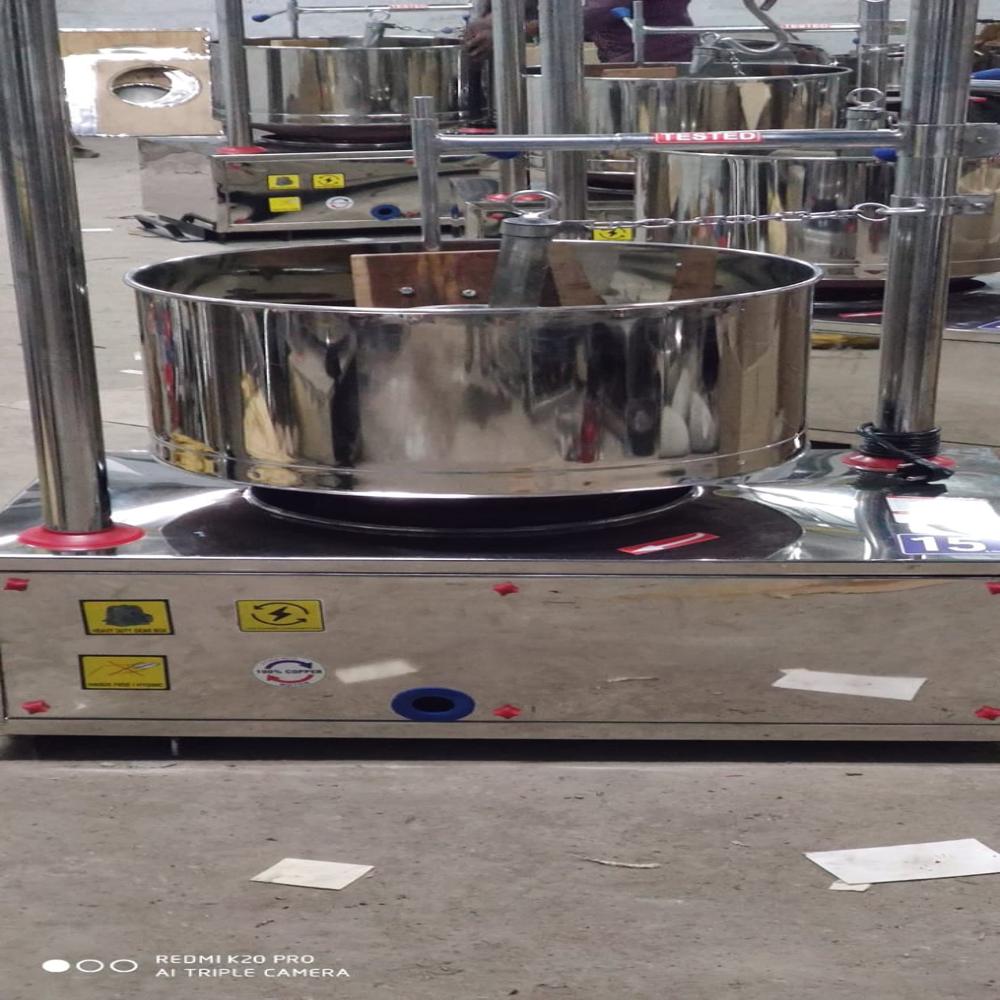
Price 35500.0 INR / Number
Minimum Order Quantity : 1 Number
Capacity : 15 Ltr
General Use : GRINDING
Automation Grade : SEMIAUTOMATIC
Heating Method : NIL
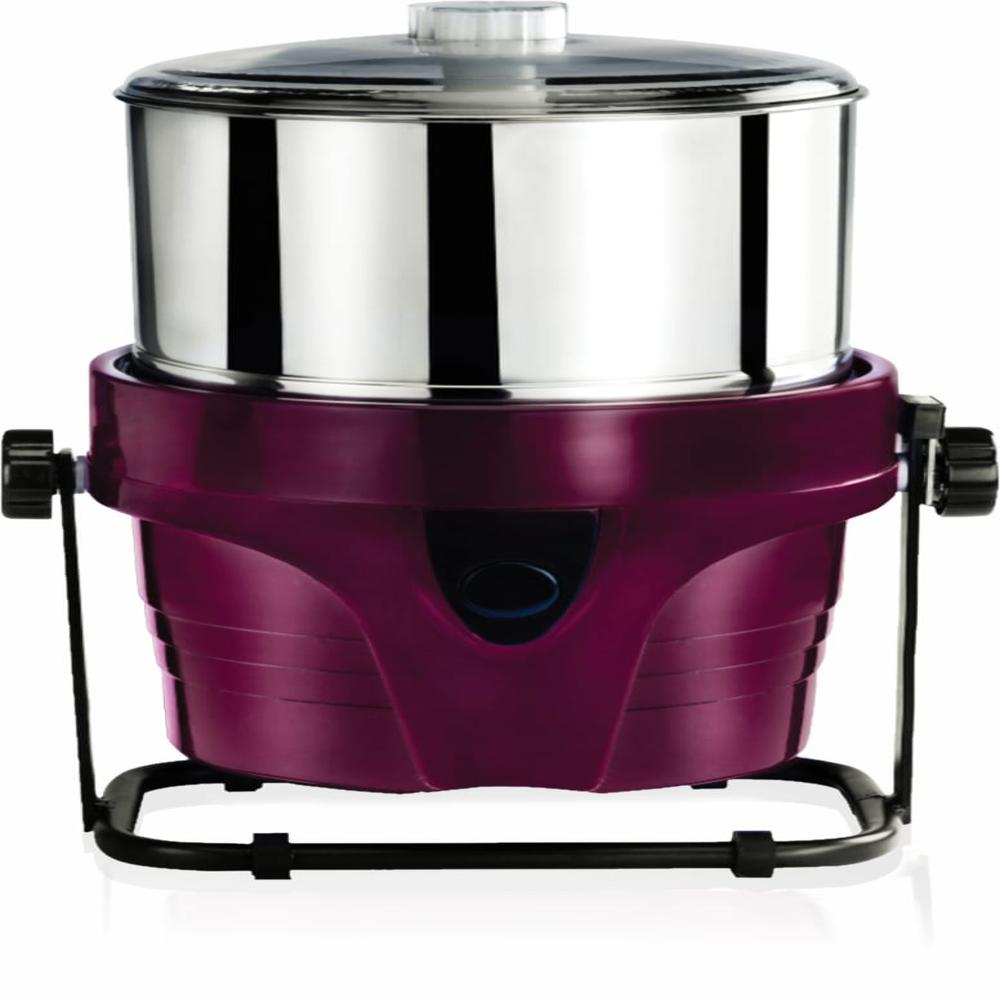
Price 6500.0 INR / Number
Minimum Order Quantity : 1 Number
Capacity : 2 Ltr
General Use : GRINDING
Automation Grade : SEMIAUTOMATIC
Heating Method : NIL
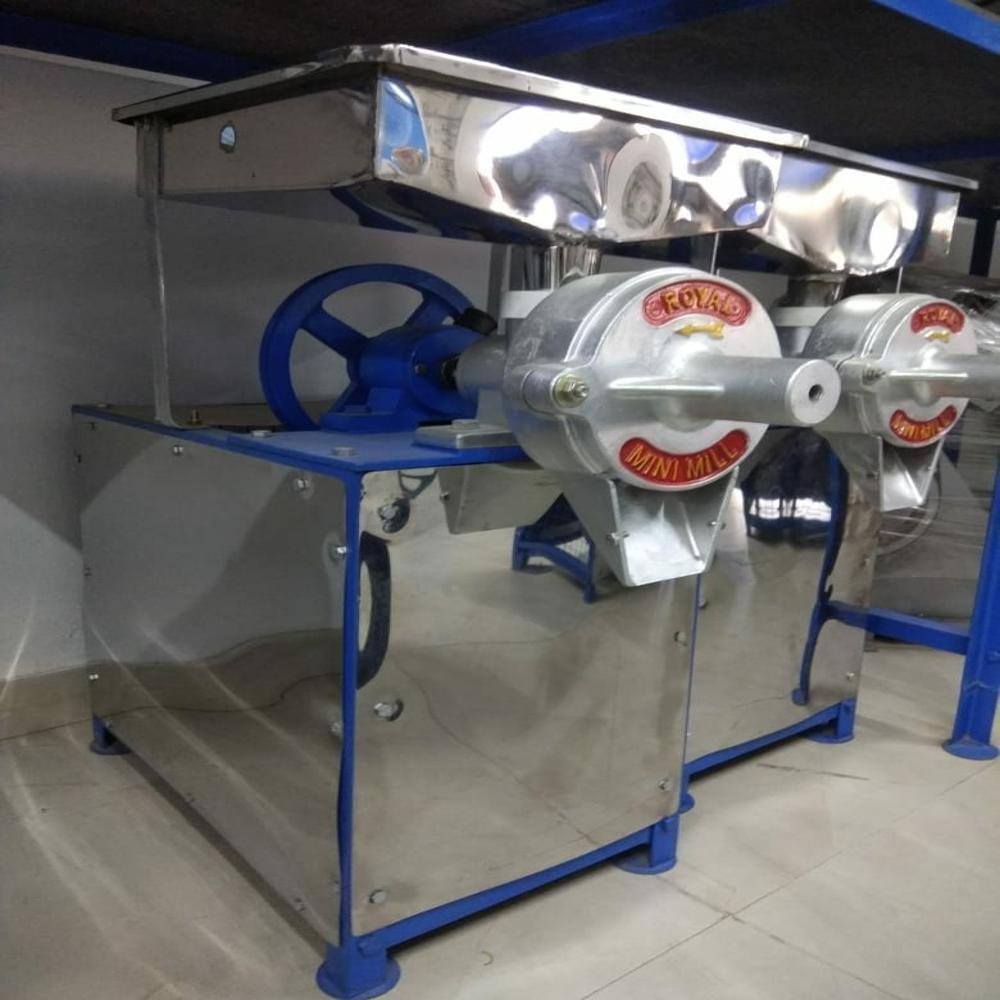
Price 31000.0 INR / Number
Minimum Order Quantity : 1 Number
Capacity : 40 Kg/hr
General Use : Grinding batter
Automation Grade : SEMI AUTOMATIC
Heating Method : NIL
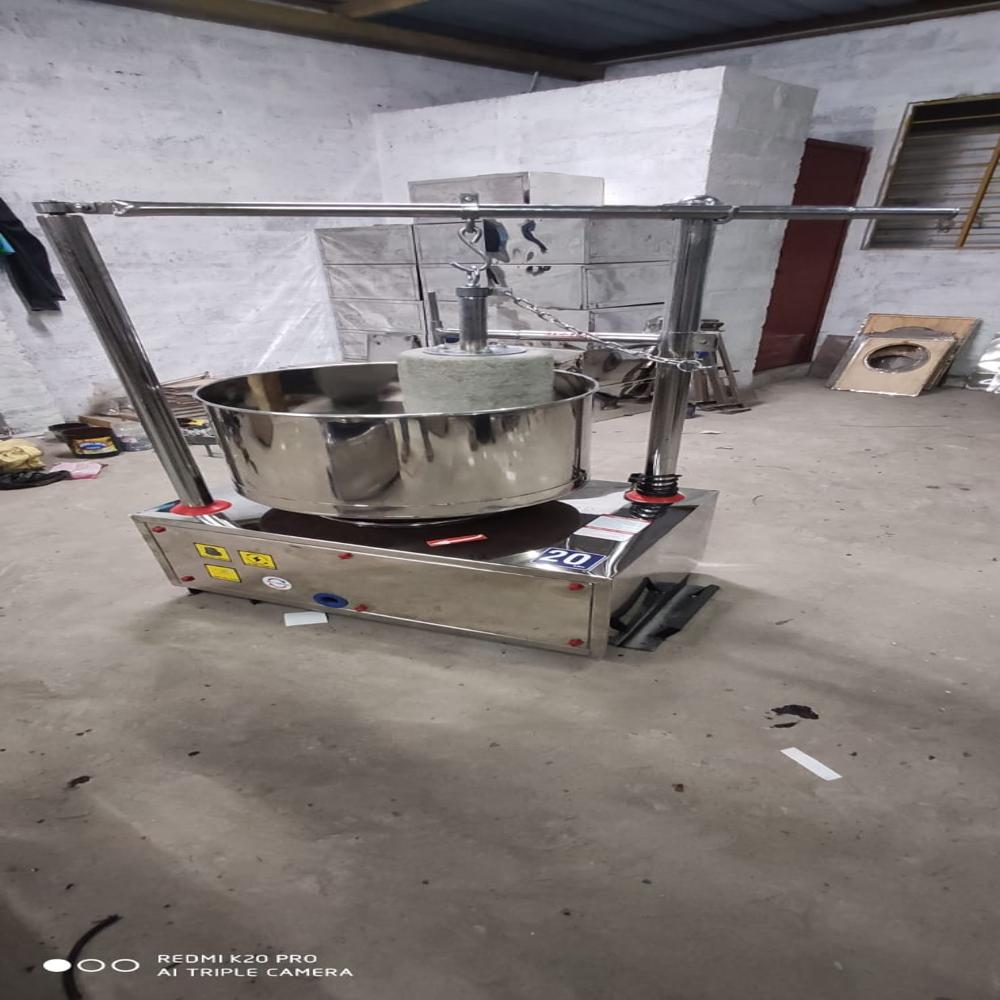
Price 45500.0 INR / Number
Minimum Order Quantity : 1 Number
Capacity : 20 Ltr
General Use : GRINDING
Automation Grade : SEMIAUTOMATIC
Heating Method : NIL

 Send Inquiry

 Send Inquiry